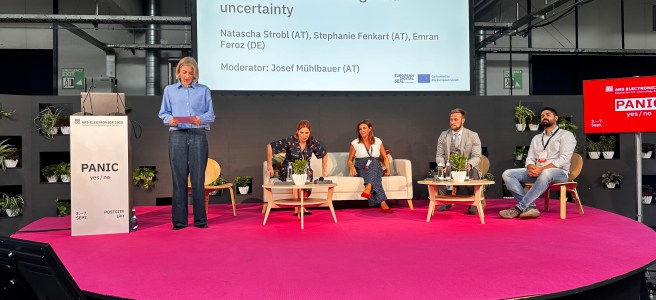
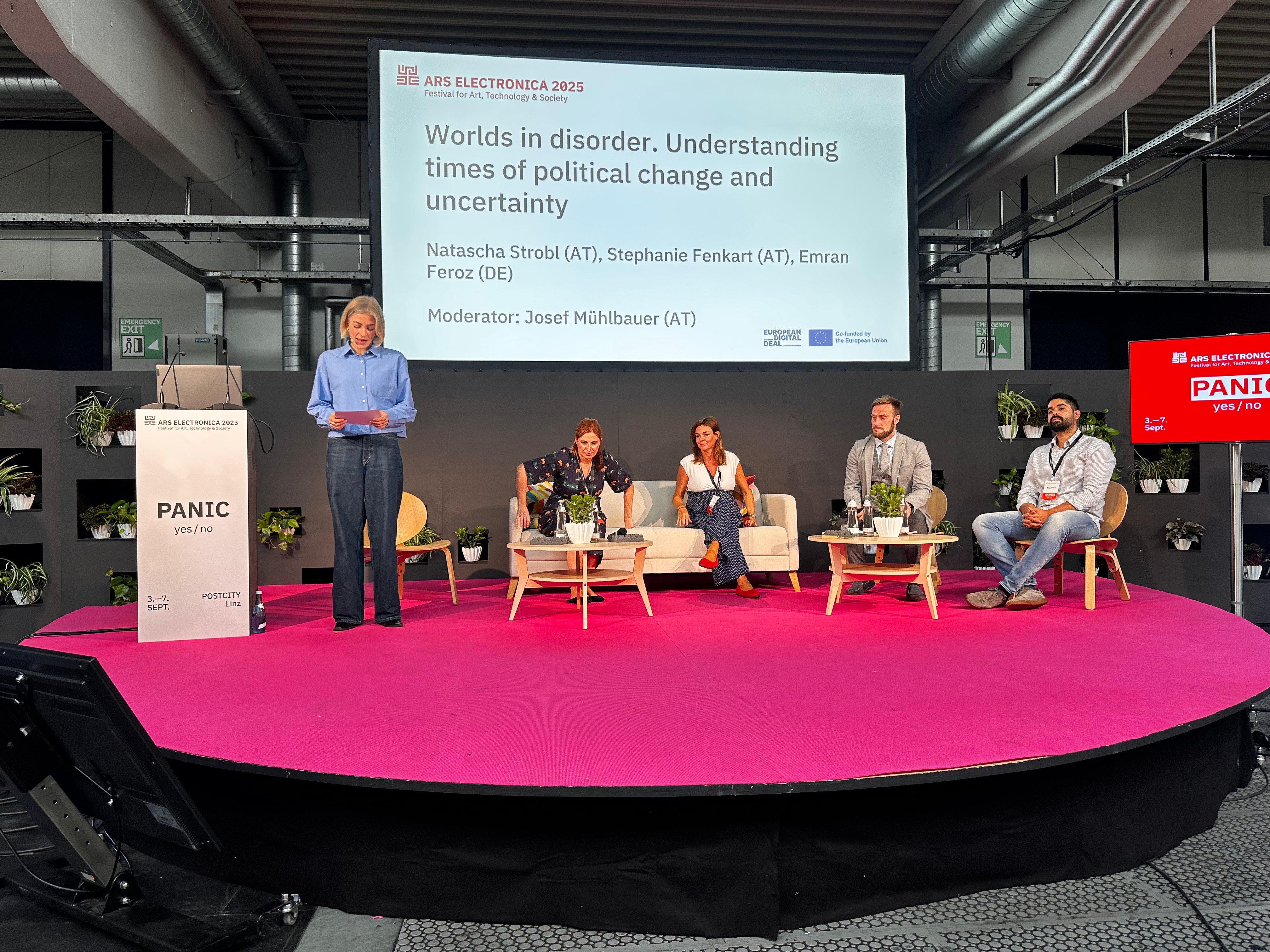
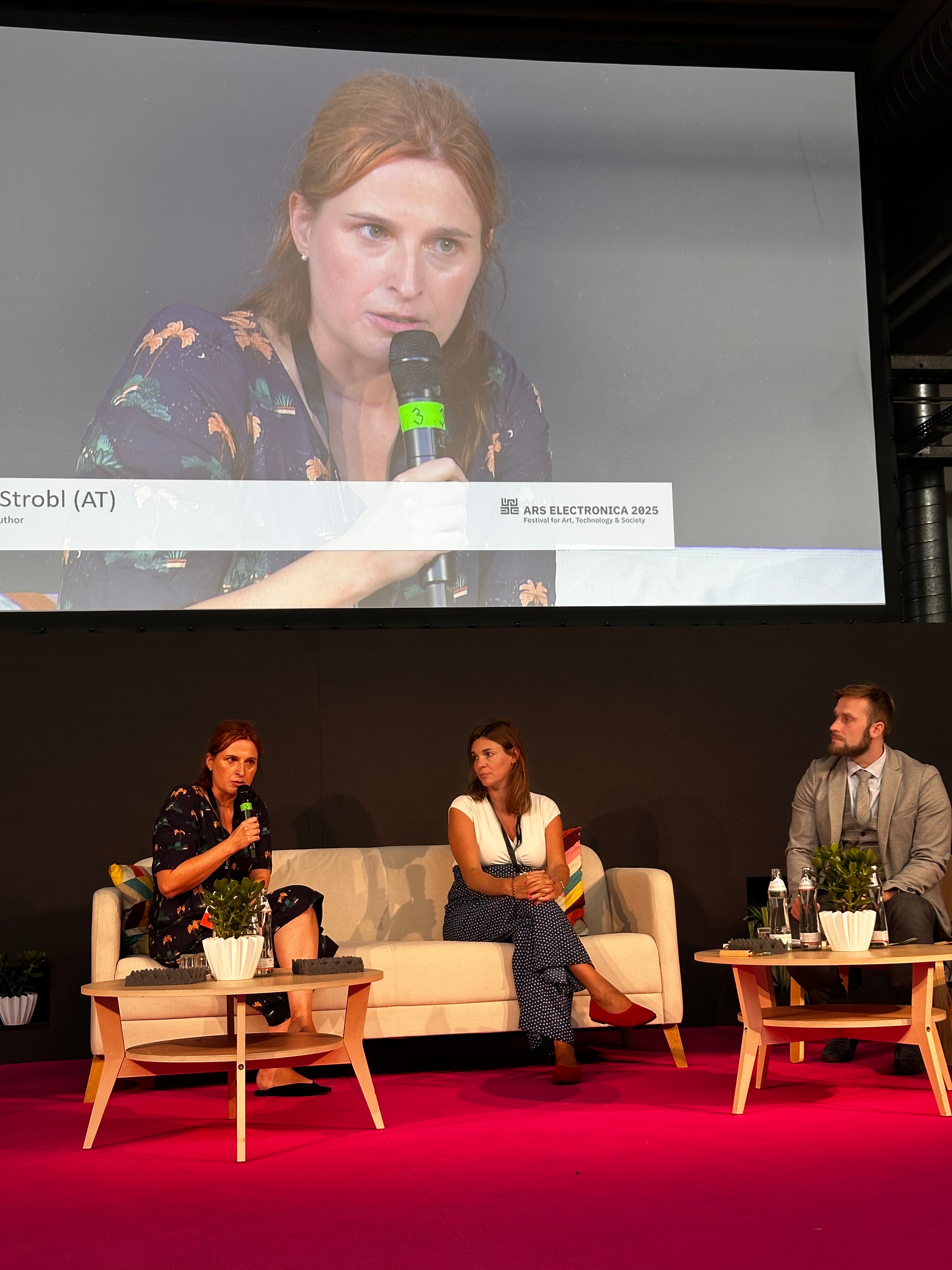
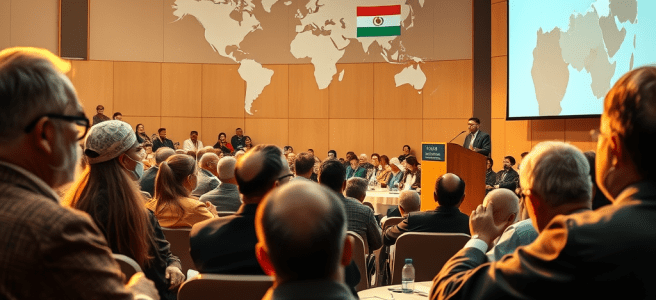
From a peace research perspective, our panel deconstructed the connections between geopolitics, the current global rise of right-wing extremism, and the legacy of the failed US-led intervention in Afghanistan. You can watch the whole event and the panel discussion on the YouTube Channel of ARS Electronica.
We analyzed how the failure of the US-led invasion and intervention in Afghanistan (since 2001) exemplifies the fundamental flaws of liberal interventionism and the limits of imposed peace through military means (the so called „liberal Peacebuilding). This failure has not only created a humanitarian crisis but has also severely damaged the credibility of Western powers (and values), creating a power vacuum and accelerating a shift towards a more multipolar—and yet unstable—world order. Fenkart made the argument that the EU must step up, and realize its strategic autonomy.
The discussion critically examined how this geopolitical disillusionment and the narratives of „endless, futile wars“ are exploited by right-wing populist and extremist movements. These groups weaponize the legacy of intervention to fuel isolationism, xenophobia, and a rejection of multilateral institutions, thereby undermining the very frameworks designed to maintain international peace and security. Strobl pointed out that we wittness a global rise of fascism.
Ultimately, the panel argued that these are not isolated crises but symptoms of a deeper breakdown. We concluded that a sustainable path forward requires a critical peacebuilding approach: moving beyond militarized responses, addressing the root causes of conflict and radicalization (such as inequality and political disenfranchisement), and rebuilding trust through accountable diplomacy and support for inclusive civil societies.
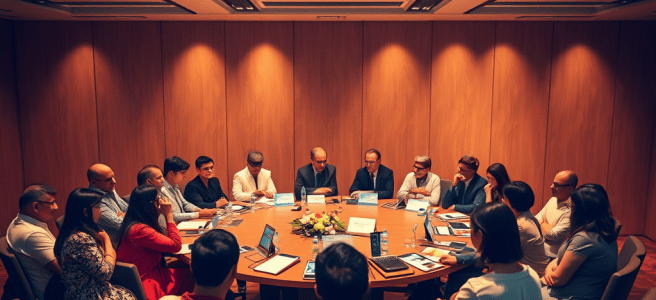
The interaction with the audiance was vivid and showed the lively engagement of the audiance with the panelists.
Derzeit erleben wir weltweit über 50 bewaffnete Konflikte. Mindestens zwei davon zeigen uns gerade mit brutaler Deutlichkeit, was genozidale Kriegsführung wirklich bedeutet.
„Im Sudan, in der Region Darfur, breitet sich die Cholera explosionsartig aus. Die Zahlen sind erschütternd: Allein in einer Stadt, Tawila, sind seit Juni über 1.180 Menschen erkrankt, darunter 300 Kinder. Mindestens 20 sind bereits gestorben. Diese Seuche trifft auf eine Bevölkerung, die bereits am Limit ist: Gewalt, Hunger und eine völlig zusammengebrochene Gesundheitsversorgung. Die Zahl der mangelernährten Kinder hat sich im letzten Jahr verdoppelt – eine tödliche Kombination.“ (UNICEF, 2025)
„Und dann blicken wir nach Gaza. Laut einer Analyse im Guardian, die auf israelischen Militärdaten basiert, sind 83 Prozent der Getöteten Zivilisten – d.h Frauen, Kinder, Männer, die keine Kombattanten waren. Diese unvorstellbare Zahl ist die Grundlage für die Vorwürfe, dass es sich hier um einen Genozid handeln könnte.“ (Emma Graham Harrison & Yuval Abraham, Guardian 2025)
Diese beiden Krisen sind nur Beispiele von vielen. Sie erinnern uns daran, warum multilaterale Abkommen und die Arbeit der UN so unendlich wichtig sind. Für den Frieden. Für die Menschlichkeit.
Das Lied „Dust of Darfur“ ist ihnen gewidmet. Hört es euch gerne an und teilt es wenn ich auch gegen Krieg und gegen Genozide seid!
Hier ein weiterer Textbaustein der in den Lyrics als „fragmented world“ vorkommt. Hier die ganze Rede in der UN in Wien.
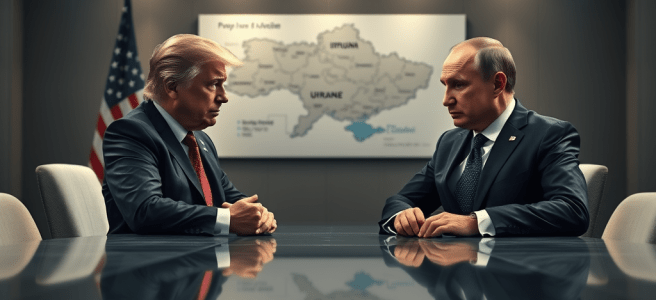
Context of the „Peace Negotiations“ in Alaska (2025): The prospect of peace negotiations (Alaska 2025) between the US, and Russia represents one of the most critical geopolitical junctures of the 21st century. Therefore it is important to understand the broader picture. The ongoing „peace negotiations“ between the US and Russia cannot be understood merely as a tactical chess game between great powers (realist school). We need to consider raw materials, the imperial mode of living (capistalist mode of production), and class struggle in order to see the bigger picture.
Great Power Bargaining? One Part of the Picture: (Neo-)Realism Although there are no direct and official peace negotiations between the US/Russia and Ukraine, there are signals from the great powers that suggest a preparation for potential „back-channel talks“. Trump has repeatedly claimed he would end the Ukraine war in only „24 hours“, implying a willingness from the US to pressure Ukraine into concessions, most likely involving the (de facto not de jure!) recognition of Russian control over Crimea and the annexed territories (like the Donbas) in exchange for a ceasefire and peace deal. Peace in that regard comes with a price tag. This approach aligns with a (neo-)Realist school of thought, most famously articulated by Prof. John Mearsheimer, which analyzes this war as a great power proxy conflict. Ukraine in that sense is seen as the „backyard“ of Russia. In other words, Ukraine is in the sphere of influence of Russia. From this (neo-)Realist perspective, NATO’s eastward expansion encroached on Russia’s sphere of influence, provoking a predictable and brutal response. The great power bargaining, or the Realist negotiation, would therefore involve:
Neutrality of Ukraine
Recognizing Russia’s regional security interests
No NATO expansion to the east, near the Russian border.
The Bigger Picture Contains Class Struggle & Raw Materials: Critical Peace Studies While valuable, this theoretical framework overlooks other key dimensions (Denys Pilash 20.08.2025, Democracy Now). It is overwhelmingly working-class men—both Ukrainian and Russian—who are dying on the frontlines. The war reproduces social inequalities where elites decide, and ordinary citizens pay the price. Ukraine is rich in critical raw materials such as lithium, titanium, and rare earths. These resources are central to the global competition over energy transition, technology, and future economic power (see also the Critical Raw Material Act, 2023). Both the US/EU and Russia have vital interests in securing or denying access to them. Thus, the war is not only about borders or NATO but also about the material basis of 21st-century industrial strategy. The current imperial mode of living contains a mode of production that is heavily dependent on critical raw materials and the exploitation of cheap labor force. In that sense, critical peace scholars highlight that in order to make a lasting peace deal one needs to create more just ways of living. Before I dig deeper into that approach, my take on the Alaska „peace talks“.
My Take on the Alaska Meeting: In 1784, Grigorii Shelikhov established the first permanent Russian outpost on Kodiak Island at Three Saints Bay (Russian Colonization of Alaska). Eager to eliminate rival Russian companies and gain control of the entire North Pacific fur trade, Shelikhov expanded the sphere of Russian influence along the Alaskan coast and petitioned Empress Catherine the Great to grant him a monopoly (full essay). Alaska was Russian America until its purchase by the United States in 1867, therefore Alaksa can be seen as a source of Putins imperial nostalgia. For Russia (under the Tsar), it was a distant, difficult-to-defend territory that became a financial liability. For the emerging US, it was a strategic masterstroke, adding immense natural resources and extending its Pacific power projection. Its importance today is not territorial but diplomatic and symbolic. It stands as the prime example of a peaceful, large-scale territorial transaction between the two powers. It represents a time when US and Russian interests, despite mutual suspicion, could be reconciled through pragmatic negotiation. On the other hand, it shows the imperialist behaviour of Tsarist Russia and the US. On the surface, it was a peaceful and pragmatic deal, but beneath that, it was a fight for hegemony and expanding its sphere of influence. Therefore Alaksa means inner-imperialist negotiations, or great power chess games. For both, Putin and Trump, this is of course the right place to talk.
Many analysts portray Donald Trump’s accommodating stance toward Putin as born of personal admiration or even susceptibility (Michael Clarke 20.08.2025, Skye News). A more compelling, strategic explanation is that it stems not from a fear of Putin the person, but from a prudent and acute fear of the logical endpoint of uncontrolled escalation: a direct NATO-Russia war or nuclear exchange. This is not weakness; it is a form of realist caution. The fundamental principle of Mutually Assured Destruction (MAD) that governed the Cold War still applies.
Pathways to a Lasting and Just Peace: Critical Realism Maybe Prof. Mearsheimer is correct. In the short to medium term, stability will require a realist bargain between the superpowers. Security guarantees for Ukraine would involve states from the global south, and from Europe to ensure the sovereignty of Ukraine within its agreed borders. Security guarantees for Russia would involve negotiations on NATO expansion and the limits on missile deployments. Treaties like START, INF, and Open Skies should be implemented again. Security for European powers would involve the reduction of energy and military dependence on both the US and Russia, granting Europe more strategic autonomy.
From a critical peace and critical realist stance, these described guarantees will only freeze the conflict. Long-term, resilient peace should address the root causes. This means supporting Ukrainian and Russian anti-war and pro-democracy movements. Only peace negotiations from below have more legitimacy. Elites can easily mobilize a poor or indoctrinated population for war; therefore, the reduction of the grotesque inequality within and between states should be the top priority of governments. Last but not least, local voices should be heard from all sides of the war. Economic, political, and cultural ties across the region should be created. Besides „Realpolitik“, we need to understand peace negotiation not as a single decision by rich and powerful (old, white) men, but as a complex process that includes the war’s material basis (resource competition, capitalism) and its „human cost“ borne by the working class.
Of course, this is not the full picture, but hopefully, it is a bigger one than that portrayed by the Realist school of thought or by liberal thinkers.
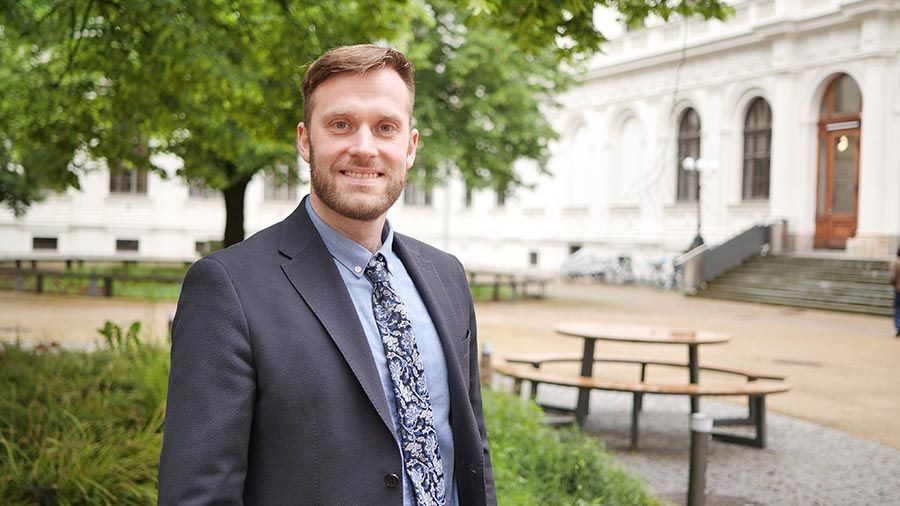
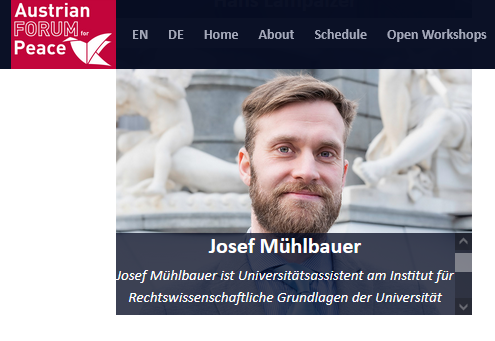
Josef Mühlbauer, Author of several books and scienfitic articles, (Keynote) Speaker, Peace Journalist at the Varna Institute for Peace (VIPR), Peace Researcher at the University of Graz in the field of Critical Peace Studies. Member and scientific researcher at the NGO „Empowerment for Peace“ (EfP).
Friedensjournalist, Frieden, Friedensforscher, Friedenswissenschaft, Friedensbuchautor, Josef Mühlbauer, Speaker und Autor (Foto: Uni Graz/Radlinger 2025)
2nd International Conference on Critical Peace Studies – 6th August 2025, Pakistan – Report by Josef Mühlbauer
The 2nd International Conference on Critical Peace Studies provided a vital platform for rigorous scholarly engagement with pressing global conflicts and the structures perpetuating violence. The final announcement underscored the urgency felt by participants, particularly highlighting the ongoing crisis in Gaza as a backdrop demanding critical reflection and action. Keynote presentations offered profound theoretical and practical insights into pathways toward transformative peace.
Highlights – Decolonizing Knowledge, Power and Being
Prof. Richard Jackson delivered a powerful and urgent address, invoking Walter Mignolo’s concept of „Epistemic Disobedience.“ He argued that the current era, marked by the „live-stream genocide in Gaza,“ necessitates a radical break from dominant, often Western-centric, knowledge systems that normalize or obscure such violence. Jackson passionately advocated for the creation and centering of indigenous knowledge as an act of resistance and a fundamental step towards building genuine peace. He framed epistemic disobedience as an essential scholarly and ethical imperative in times of overwhelming state violence and propaganda.
Prof. Huma Baqai provided a compelling analysis of contemporary shifting geopolitical alliances and realignment. She critiqued the common framing of the emerging world order as „multipolar,“ arguing that this term evokes the dangerous rivalries and bloc politics that characterized the era leading up to and including the First World War. Instead, Baqai strongly advocated for the concept of „Multiplexity.“ She defined this as a global system characterized by:
–> Multidimensionality: Complex interactions across multiple axes (economic, cultural, technological, security) beyond simple power poles. Baqai argued that embracing multiplexity, rather than multipolarity, offers a more accurate and hopeful framework for navigating current global complexities and fostering cooperative stability.
–> The Absence of Hegemony: No single power or bloc dominating.
–> Decentralization: A more distributed and networked international structure.
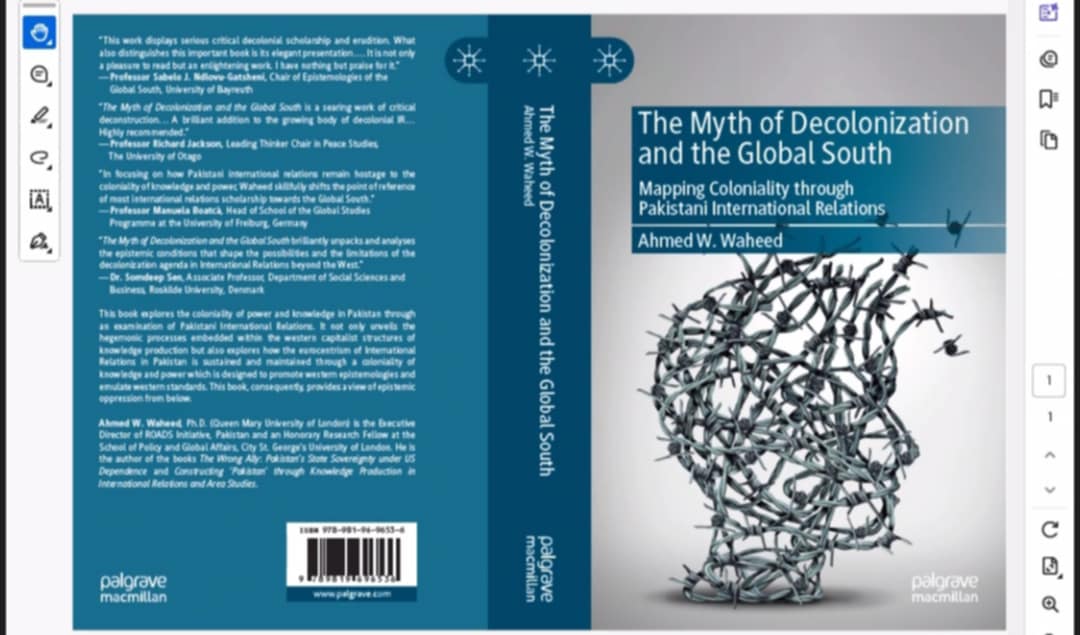
Dr. Ahmad Waqas Waheed presented his significant work, „The Myth of Decolonization and the Global South.“ His presentation critically examined the persistent structures of power, knowledge, and economic dependency that continue to shape North-South relations long after formal colonial independence. He challenged the notion that decolonization is a completed project, arguing instead for a deeper understanding of its unfinished nature and the enduring challenges faced by the Global South within the contemporary international system.
The conference featured a rich tapestry of presentations beyond the keynotes. Numerous scholars, activists, and practitioners presented cutting-edge research and critical analyses on diverse themes, including:
Postcolonial and Decolonial Approaches to Peace & Conflict: Exploring the enduring legacies of colonialism and imperialism in contemporary conflicts and peacebuilding paradigms. Dr. Caroline Schöpf explored the machanisms of interellectal imperialims & academic dependency as well as the possibility of autonomous knowledge.
Intersectionality in Peace & Security: Examining how gender, race, class, religion, and other identities shape experiences of conflict and peace.
Critical Security Studies: Questioning traditional state-centric security models and exploring alternative conceptions of human and ecological security.
Peace Education & Pedagogy: Discussing innovative and critical methods for teaching peace and challenging structures of violence within educational systems.
Non-Western & Indigenous Peace Traditions: Highlighting diverse philosophies and practices of peacebuilding from often marginalized perspectives.
The Political Economy of Conflict: Analyzing the role of resources, economic systems, and global capitalism in driving and sustaining violence.
The depth and breadth of these presentations, spanning various disciplines and geographical contexts, significantly enriched the conference dialogue and underscored the multifaceted nature of critical peace studies.
Personal Reflection & Key Takeaways
Attending this Second International Conference on Critical Peace Studies was an exceptionally enriching experience. The intellectual rigor, the courageous engagement with contemporary atrocities like the situation in Gaza, and the profound theoretical contributions – particularly the emphasis on epistemic disobedience (Jackson), multiplexity (Baqai), and the critique of decolonization myths (Waheed) – provided invaluable insights and frameworks for understanding and challenging the root causes of violence and injustice in our world. The conference not only deepened my theoretical understanding but also reinforced the crucial role critical scholarship plays in advocating for a more just and peaceful future. I learned a tremendous amount from the diverse perspectives shared and the passionate commitment of all participants. Specifically, the conference significantly deepened my understanding in several critical areas:
The Necessity of Normative Scholarship for the Subaltern: Moving beyond detached objectivity, the conference validated the importance of engaged, normative scholarship. It powerfully demonstrated that researching and writing for and alongside the subaltern – centering their experiences, perspectives, and struggles – is not just acceptable but essential and good. This normative commitment is key to dismantling oppressive structures and amplifying marginalized voices in the pursuit of justice and peace.
The Strategic Imperative of South-South Cooperation: Presentations and discussions illuminated the vital role of South-South cooperation as a practical mechanism for challenging dominant power structures and fostering alternative pathways to development, security, and knowledge exchange outside traditional Western-centric frameworks. This emerged as a crucial strategy for building resilience and agency within the Global South.
Epistemic Liberation: Free & Non-Western Knowledge Production: Prof. Jackson’s powerful call for „epistemic disobedience“ resonated profoundly, underscoring the urgent need to break free from hegemonic knowledge systems. The conference strongly reinforced the critical importance of free, non-Western knowledge production, particularly the validation, creation, and centering of Indigenous knowledge. This is not merely an academic exercise but a fundamental act of resistance and a prerequisite for genuine peace and understanding.
Critical Political Economy Conference, 30 July 2025, Helsinki Finnland.
Report by Josef Mühlbauer, 4.8.2025.
The vibrant and historically resonant city of Helsinki – famously divided between its „red“ workers‘ districts and „white“ bourgeois quarters – provided a fitting backdrop for the opening day of the Critical Political Economy Conference. The atmosphere was charged with critical inquiry, underscored by the symbolic singing of the „Internationale“ at the long bridge. I was honoured to be among the invited speakers, presenting my work alongside insightful contributions from international scholars.
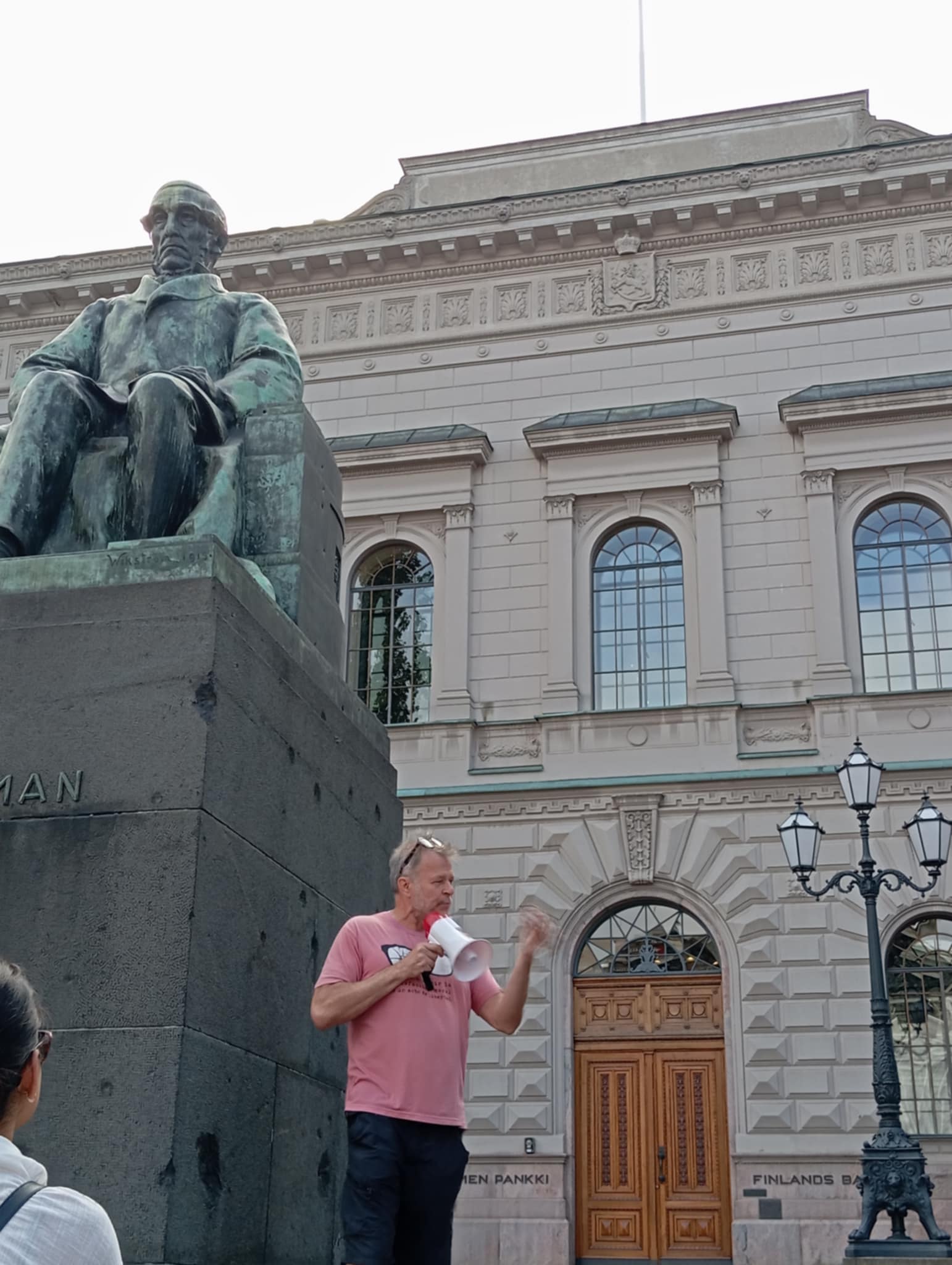
Prof. Teivo Teivainen was not only one of the organizers and hosts of this event, he also took the time and went on a city tour with the participants of the conference and talked about the history and political development of Helsinki.
Workshop:Narrating the Global Water Crisis (Gemma Gasseua & Madelaine Moore): Gasseua and Moore dissected the narratives emerging from the 2023 UN Water Conference. Their research revealed how the framing of the water crisis shifts dramatically depending on the sector: businesses focus on pricing, environmental movements on climate change, while critical issues like „water grabbing“ and decades of social struggle are systematically silenced or obscured. Gasseua powerfully argued for viewing water through a feminist lens, essential for social reproduction.
Workshop: How to be Anti-AI in the 21st Century (David Bailey): Prof. Bailey delivered a trenchant critique of Artificial Intelligence under capitalism. He argued AI’s harms stem not from the technology itself, but from its deployment within exploitative systems: intensifying worker precarity, enabling surveillance (e.g., its use in the Gaza war), consolidating oligarchic power, and accelerating ecological damage and racialized extractivism. His core message challenged the „inevitability narrative“ surrounding AI.
Workshop: Shaping the South: 19th Century British Interests in Latin America (Dr. Perla Polanco Leal): Dr. Polanco Leal explored Britain’s „Informal Empire“ in Latin America. Faced with the high costs of formal colonization, Britain instead used diplomacy, investment, and infrastructure (railways, ports, telegraphs) to establish systematic value extraction. This involved detailed geological surveys and entrenched exploitative labor practices, creating enduring extractive economic models and reinforcing racialized hierarchies in production and trade.
Impressions:
Johannes Jäger FH Wien presented his latest project. (c): Josef Mühlbauer, Helsinki, 30.7 – 1.8.2025
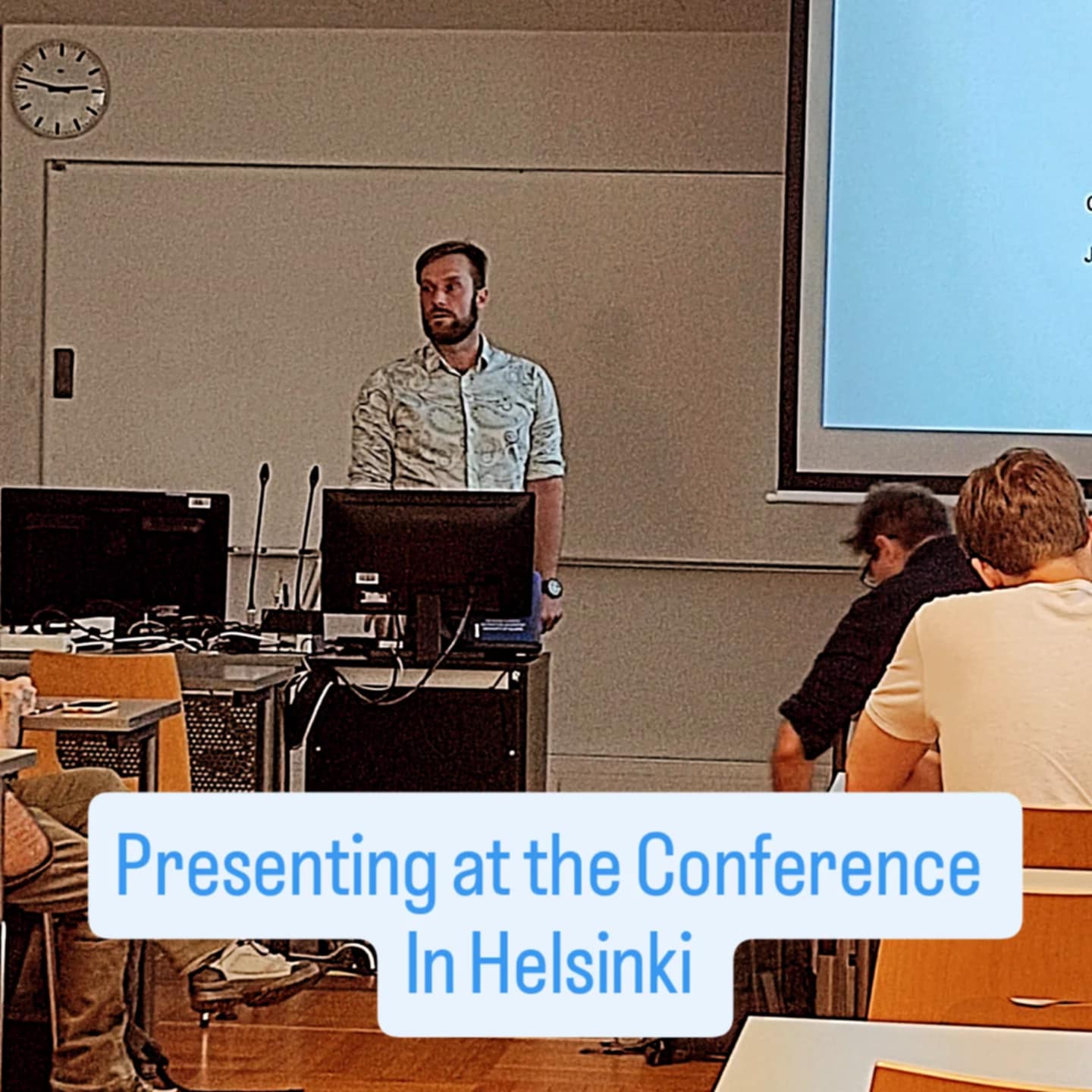
My Presentation: Navigating the Interregnum – Polycrisis and Liquid Modernity
My contribution, „Interregnum, Polycrisis, and the Concept of Liquid Modernity: Navigating the Current Conjuncture,“ sought to provide theoretical frameworks for understanding our profoundly unstable times.
Josef Mühlbauer presenting at the Conference in Helsinki, Finnland. (c): Josef Mühlbauer 1.8.2025.
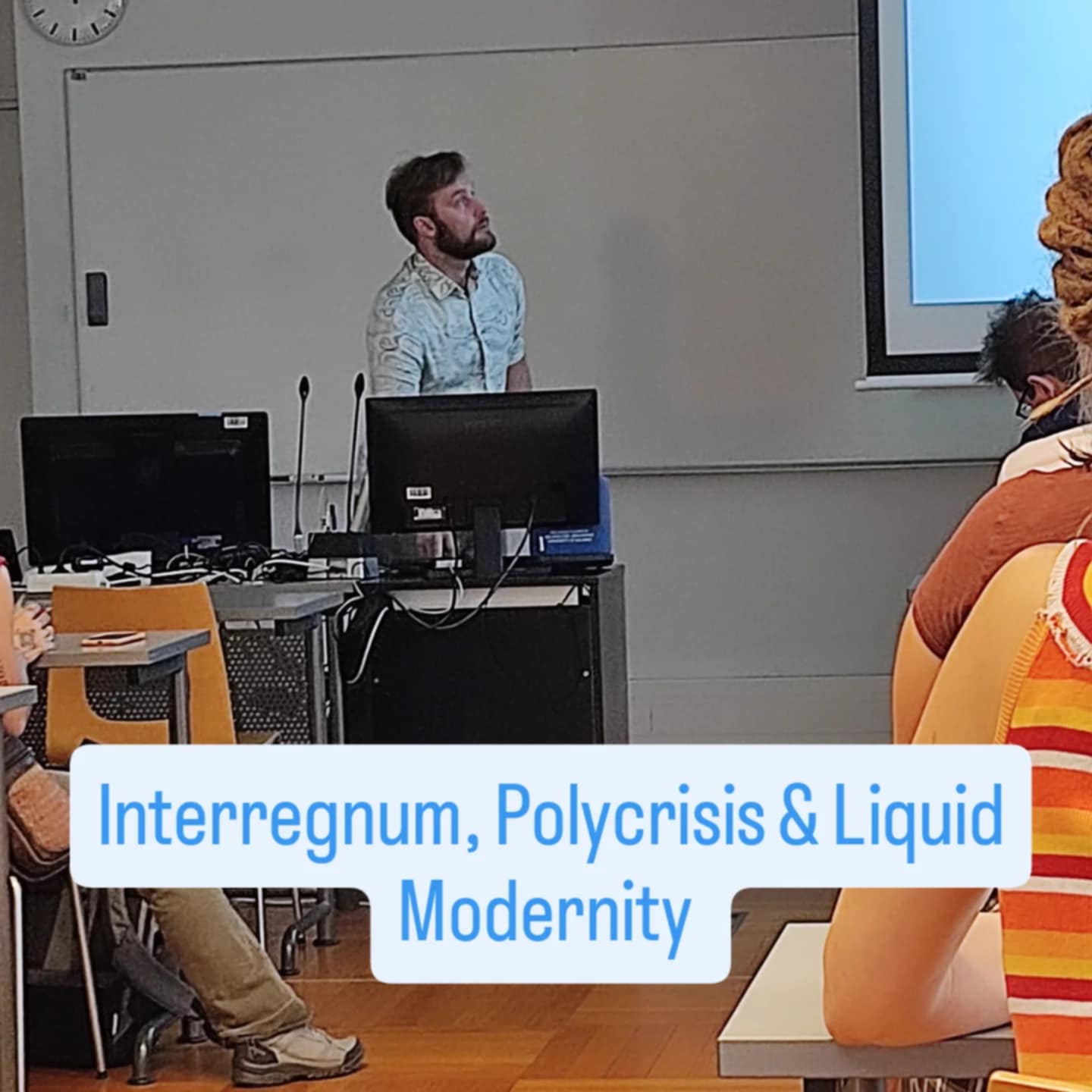
Interregnum: Drawing on Gramsci, I framed our era as an „interregnum“ – a period where the old structures and certainties (political, economic, social) are dying, but the new ones have not yet been born. This manifests as a pervasive sense of dislocation, institutional crisis, and a struggle over what comes next. Helsinki’s own historical divisions felt emblematic of this global condition.
Polycrisis: I argued we are not facing isolated crises (ecological, economic, political, social), but a polycrisis – a dense web of interconnected, mutually reinforcing crises. The water crisis discussed by Gasseua & Moore, the exploitative logic of AI critiqued by Bailey, and the legacies of extractivism analyzed by Polanco Leal are not separate issues; they are facets of this singular, complex polycrisis rooted in global capitalism’s contradictions.
Josef Mühlbauer presenting at the Conference in Helsinki, Finnland. (c): Josef Mühlbauer 1.8.2025.
Liquid Modernity (Bauman): Finally, I employed Zygmunt Bauman’s concept of „liquid modernity“ to understand the experience of this interregnum and polycrisis. Our social bonds, institutions, and even identities feel fluid, unstable, and perpetually in flux. Solid structures melt away, replaced by uncertainty and a constant demand for adaptation. This liquidity makes collective action challenging yet simultaneously underscores its desperate necessity.
Understanding these three concepts together is crucial for developing critical political economy strategies capable of navigating this turbulent period and forging pathways beyond the crisis of the present.
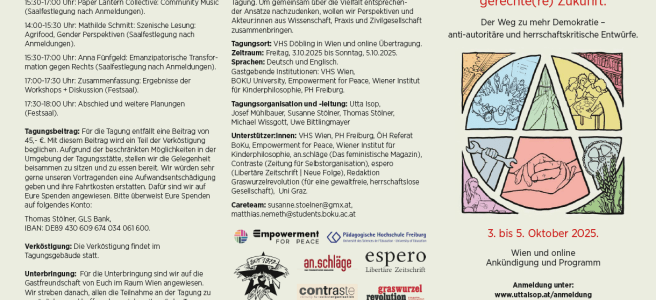
3. bis 5. Oktober 2025 in Wien und hybrid (online) (Programm siehe ganz unten) (english version below)
Der Weg zur mehr Demokratie – anti-autoritäre und herrschaftskritische Entwürfe
Tagung: Transformation in eine sozial-ökologisch gerechte(re) Zukunft. Unter dem Motto: „Der Weg zur mehr Demokratie – anti-autoritäre und herrschaftskritische Entwürfe“ organisieren Prof. Dr. Uwe Bittlingmayer, MMag. Utta Isop, Mag. Thomas Stölner uvm. eine Tagung in Wien. Mit dabei sind renommierte Schriftsteller wie Ilija Trojanow, Kunstschaffende wie Konstantin Wecker und zahlreiche Professor:innen und Aktivist:innen.
Mit den »Anarchistischen Gesellschaftsentwürfen« haben wir uns bemüht, eine fundierte Sammlung von konkreten Konzepten für eine gerechtere, demokratischere, herrschaftsfreie Gesellschaft vorzulegen (Stölner et al. 2023). Auf unserer nächsten Tagung wollen wir uns mit dem Weg dorthin beschäftigen. Wir wollen daher mindestens sechs Pfade beziehungsweise Transformationsstrategien dorthin skizzieren. Dies ist umso mehr von Bedeutung, als wir so in Organisierungen gegen Autokratien und Rechtsextremismen längerfristige gesellschaftliche Perspektiven entwickeln.
Was sind die Ziele und wer ist die Zielgruppe?
Diese hybrid stattfindende Tagung will wissenschaftliche, praxisorientierte und zivilgesellschaftliche Perspektiven und Akteur*innen zusammenbringen, um über Lösungen und Alternativen zur bestehenden multiplen Krise (Brand 2009) oder auch zur „ökologisch-sozialen Zangenkrise“ (Dörre 2021) nachzudenken. Es sollen die Ergebnisse nicht nur vor Ort diskutiert werden, sondern es soll im Anschluss an diese Tagung ein Sammelband mit theoretisch-konzeptionellen als auch praxisorientierten Beiträgen entstehen.
Warum sollte jemand dieses Projekt unterstützen?
1. Gegenwehr gegen Rechtsextremismus stärken Rechtsextreme Gruppierungen leugnen oft Klimawissenschaft, bekämpfen soziale Gerechtigkeit und bedrohen demokratische Strukturen. Eine solche Tagung entwickelt Handlungsstrategien, um dieser Ideologie entgegenzutreten – Ihr Beitrag finanziert konkrete Abwehrmechanismen.
2. Zukunftsfähige Lösungen fördern Die Tagung verbindet ökologische Nachhaltigkeit mit sozialer Gerechtigkeit – zwei zentrale Pfeiler einer krisenresistenten Gesellschaft. Ihre Spende ermöglicht den Austausch von Expert:innen, die praxisnahe Transformationskonzepte entwickeln (z. B. klimagerechte Armutsbekämpfung).
3. Demokratische Vernetzung sichern In Zeiten polarisierter Debatten schafft die Tagung sichere Räume für zivilgesellschaftlichen Dialog. Sie fördern damit Netzwerke von Aktivist:innen, Wissenschaftler:innen und NGOs, die gemeinsam demokratiefeindlichen Kräften widerstehen.
4. Prävention durch Bildung Rechtsextremismus profitiert von sozialen Ängsten (z. B. durch Jobverluste in Kohle-Regionen). Die Tagung zeigt, wie ökologischer Wandel gerecht gestaltet werden kann – Ihre Spende unterstützt Aufklärung, die Radikalisierung vorbeugt.
5. Zeichen der Solidarität setzen Mit Ihrer Spende demonstrieren Sie: Die Zivilgesellschaft lässt sich nicht spalten! Sie stehen ein für eine inklusive Transformation, die niemanden zurücklässt – besonders wichtig, wenn rechte Gruppen ökologische Politik als „Elitenprojekt“ diffamieren.
6. Multiplikator:innen-Effekt Das Tagungswissen wird durch Workshops, Publikationen und Medienarbeit bundesweit verbreitet. Jeder Euro wirkt somit weit über die Veranstaltung hinaus – Sie investieren in langfristige gesellschaftliche Veränderung.
7. Dringlichkeit der Krisen Klimakrise und Rechtsextremismus sind existentielle Bedrohungen. Diese Tagung adressiert beide Synergien – statt Einzelthemen zu isolieren. Ihre Unterstützung beschleunigt Lösungen in einer entscheidenden Phase.
Finanzdetails
Was passiert mit dem Geld bei erfolgreicher Finanzierung?
Die Finanzierung sichert uns die Verpflegung der Tagung, sichert uns die nötigen Mitteln damit wir präkar angestellte Forscher:innen, Praktiker:innen und Aktivist:innen Honorare ausbezahlen können. Hier ist eine transparente Aufschlüsselung, wie die Fördergelder einer solchen Tagung konkret verwendet würden – basierend auf typischen Kosten einer wissenschaftlich-zivilgesellschaftlichen Veranstaltung:
Raummiete für 3 Tage (VHS übernimmt großteils) = 2.000€
Honorare (Vorträge/Workshops) ca 40 mal 250€ = 10.000€
Fahrkosten 40 Teiln. mal 80€ (Bahntickets) = 3.200€
Honorare (Kunsteinlagen) 3mal 500€ = 1.500€
Kamera, Video, Ton & Schnitt (Postproduktion) (3 Personen) 8.000€
Orga-Team (Moderation, Safe Space Beauftragte, Admin) (3 tage mal 5 Personen mal 500€ pro Tag = 7.500€
Verpflegung und Snacks für 3 Tage = 9.000€
Übernachtung/Unterkunft 20 pers mal 3tage mal 70€ = 4.200€
In Kooperation mit der Universität Graz, der PH Freiburg, Empowerment for Peace, BOKU Wien und zahlreiche weitere angesehenen Forschungseinrichtungen bzw. zivilgesellschaftliche Institutionen versuchen wir einen demokratischen Schritt nach vorne zu bewegen und neue Alternativen in Zeiten der Vielfachkrise zu entwerfen. Wir brauchen eure Unterstützung, sei es in Form von Zeit die für die Tagung einsetzen wollt, sei es in Form von Know-How oder sei es in Form einer Spende.
Fragen und weitere Infos unter: thomas.stoelner@gmx.de
Das Tagungsprogramm:
Freitag, 03.10.2025, 09:00-20:30 Uhr.
09:00-09:15 Uhr: Ankommen / Anmeldung / Musik (Festsaal).
09:30-10:30 Uhr: Begrüßung / Ziele der Tagung / „Wie gehen wir von hier ins dort“ (Festsaal).
1. Einstieg
10:30 Uhr: Musikalische Einlage (Festsaal).
10:30-11:30 Uhr: Lesung und Vortrag mit Ilija Trojanow (Festsaal)
2. Revolutionärer Weg.
Welche revolutionären Wege werden den aktuellen Herausforderungen gerecht?
11:30-13:30 Uhr: Was tragen unterschiedliche revolutionäre Ansätze (Castoriadis, Pankahyttn, Benjamin, Marx, Hindrichs, Bloch) dazu bei, anzustrebende Transformationen in eine sozial-ökologisch gerechtere Zukunft zu gestalten? Podiumsdiskussion mit Uwe Bittlingmayer, Birge Krondorfer, Alice Pechriggl, Anna Rosenberg und Florian Telsnig (Festsaal).
14:45-17:45 Uhr: WORLD CAFE für eine sozial-ökologische Zukunft. Welche aktuellen Wege entwickeln wir, um Herrschaft, Gewalt und Hierarchien abzubauen? Welche Schritte setzen wir in eine sozial-ökologisch demokratischere Zukunft? Mit Black Voices, Lea Susemichel, Susanne Stölner, Cornelia Stefan, Mathilde Schmitt, Ivana Nenadovic, Utta Isop, Heide Hammer, GemSe, Chantal Bamgbala (Festsaal).
17:45 Uhr: Musik (Festsaal).
17:50-18:20 Uhr: Zusammenfassung im großen Plenum (Festsaal)
18:20-19:50 Uhr: Abendessen.
19:45-20:30 Uhr: Abschlussevent – Theaterstück von Dada Zirkus.
3. Direkte Aktion und zivilgesellschaftliche Organisation.
Was tragen direkte Aktionen und zivilgesellschaftliche Organisierungen zu einer Transformation in eine sozial-ökologisch gerechtere Zukunft bei?
10:00-12:00 Uhr: Anarchistischer Antimilitarismus. Gegen jeden Krieg. Diavortrag und Diskussion mit Graswurzelrevolution-Redakteur Bernd Drücke (Saalfestlegung nach Anmeldungen).
10:00-12:00 Uhr: Theater der Unterdrückten Wien mit Joschka Köck (Saalfestlegung nach Anmeldungen).
10:00-12:00 Uhr: Queerfeministisches Panel. Wo setzen queer-feministische Organisierungen im Hinblick auf eine gerechtere sozial-ökologische Zukunft an? Mit Black Voices, Lea Susemichel, Mathilde Schmitt, Alice Pechriggl, Ivana Nenadovic, Birge Krondorfer, Utta Isop, Heide Hammer, GemSe, Chantal Bamgbala (Festsaal).
Welche Bildungsprozesse sind nötig, um imperiale Lebenspraktiken zu verlernen? Wie nähern wir uns ökologisch sinnvollen Alltagspraktiken an?
13:45-15:30 Uhr: Diskussionsrunde / Panel mit Petra Isepp (Alternative Wirtschaft), Thomas Lehnen (Präfiguration), Ivana Nenadovic (Zwischen Utopie und Praxis), Peter Seyfert (Murray Bookchin), (Festsaal).
15:30-16:00 Uhr: Kaffeepause.
16:00-17:00 Uhr: Josef Mühlbauer: Soziale Verteidigung (Saalfestlegung nach Anmeldungen).
16:00-17:00 Uhr: Gerhard Senft: Gemeinde als Keimzelle des sozialen Lebens (Saalfestlegung nach Anmeldungen).
16:00-17:00 Uhr: Arno Uhl: Clowns-Armee (Saalfestlegung nach Anmeldungen).
16:00-17:00 Uhr: Alexander Behr: Globale Solidarität (Saalfestlegung nach Anmeldungen).
16:00-17:00 Uhr: Roman Kiefer: A-Strategien gegen Elon Musk (Saalfestlegung nach Anmeldungen).
17:00-18:30 Uhr: Konstantin Wecker (Festsaal).
18:30-19:00 Uhr: Zusammenfassung aller Vorträge (Festsaal).
5. Allmählicher oder evolutionärer Wandel (Reformismus).
Welche reformistischen Ansätze lassen sich aktuell im Hinblick auf Demokratisierung und Ökologisierung diskutieren?
9:15-12:15 Uhr: Panel: Lottocracy, Citizen Assemblies and Council Democracy (Rätedemokratie). What do these approaches contribute to a more socio-ecologically just future? Mit Utta Isop, Jason Chrysostomou, Heide Hammer, Pedro Jacobetty und Maria von Peoples Platform (Saalfestlegung nach Anmeldungen).
9:15-12:15 Uhr: Deep Democracy: Interaktiver Vortrag & Workshop mit Maria Wiprich (Saalfestlegung nach Anmeldungen).
9:15-12:15 Uhr: Trias des politischen Kampfes: Veränderung der Praxis (Workshop) mit Anna Rosenberg, Gerhard Wogritsch, Mark Ant (Saalfestlegung nach Anmeldungen).
9:15-11:15 Uhr: Thomas Friedrich: Kritische Analyse der Gesellschaft (Saalfestlegung nach Anmeldungen).
9:15-11:15 Uhr: Uwe Bittlingmayer: Arbeit am Habitus oder den Tisch umwerfen? Pierre Bourdieu zu Möglichkeiten progressiven gesellschaftlichen Wandels (Saalfestlegung nach Anmeldungen).
Please support us with a contribution to our crowdfunding campaign. And feel free to share the link with anyone who might be interested! Thank you very much! Your organising team
In the conference volume Anarchist Visions of Society, published in 2023, we compiled concrete concepts for a more just, democratic, and non-hierarchical society.
At this upcoming conference, we aim to discuss paths toward such societies. To explore the diversity of these approaches together, we seek to bring together perspectives and participants from academia, activism, and civil society.
Venue: Adult Education Center (VHS) Döbling, Vienna, with online streaming.
Dates: Friday, October 3 to Sunday, October 5, 2025
Conference Coordination and Management: Utta Isop, Josef Mühlbauer, Susanne Stölner, Thomas Stölner, Michael Wissgott, Uwe Bittlingmayer
Supporters: VHS Vienna, PH Freiburg, Student Union (ÖH) BoKu, Empowerment for Peace, Vienna Institute for Philosophy with Children, an.schläge (The Feminist Magazine), Contraste (Newspaper for Self-Organization), espero (Libertarian Magazine | New Series), Editorial Team of Graswurzelrevolution (for a nonviolent, stateless society), University of Graz.
Conference Program
Friday, October 3, 2025 | 9:00 AM – 8:30 PM
09:00–09:15 – Arrival / Registration / Music (Main Hall)
09:30–10:30 – Welcome / Conference Goals / “How do we get from here to there?” (Main Hall)
1. Introduction

10:30 – Musical Interlude (Main Hall)
10:30–11:30 – Reading and Lecture with Ilija Trojanow (Main Hall)
2. Revolutionary Pathways
What revolutionary approaches respond adequately to today’s challenges?
11:30–13:30 – What do various revolutionary perspectives (Castoriadis, Pankahyttn, Benjamin, Marx, Hindrichs, Bloch) contribute to shaping transformations toward a socially and ecologically just future?
11:30–13:30 – What do various revolutionary perspectives (Castoriadis, Pankahyttn, Benjamin, Marx, Hindrichs, Bloch) contribute to shaping transformations toward a socially and ecologically just future?
Panel Discussion with Uwe Bittlingmayer, Birge Krondorfer, Alice Pechriggl, Anna Rosenberg, and Florian Telsnig (Main Hall)
13:30–14:30 – Lunch Break
14:30–14:45 – Artistic Interlude (Main Hall)
14:45–17:45 – World Café: What current paths are we developing to dismantle power, violence, and hierarchy? What steps are we taking toward a more socially and ecologically democratic future?With: Black Voices, Lea Susemichel, Susanne Stölner, Cornelia Stefan, Mathilde Schmitt, Ivana Nenadovic, Utta Isop, Heide Hammer, GemSe, Chantal Bamgbala (Main Hall)
17:45 – Music (Main Hall)
17:50–18:20 – Plenary Summary (Main Hall)
18:20–19:50 – Dinner
19:45–20:30 – Final Event – Theatre performance by Dada Zirkus
Saturday, October 4, 2025 | 9:00 AM – 8:30 PM
09:00–09:15 – Welcome / Arrival / Music (Main Hall)
09:15–09:45 – Morning Activity – Theatre of the Oppressed, TdU Vienna (Main Hall)
3. Direct Action and Civil Society
How do direct action and grassroots organizing contribute to transformation?
10:00–12:00 – Anarchist Anti-Militarism: Against All Wars. Slide Lecture and Discussion with Bernd Drücke (Room assignment based on registration)
10:00–12:00 – Theatre of the Oppressed with Joschka Köck (Room assignment based on registration)
10:00–12:00 – Queer-Feminist Panel: Where do queer-feminist initiatives intersect with social and ecological justice?
With: Black Voices, Lea Susemichel, Mathilde Schmitt, Alice Pechriggl, Ivana Nenadovic, Birge Krondorfer, Utta Isop, Heide Hammer, GemSe, Chantal Bamgbala (Main Hall)
12:00–13:30 – Lunch Break
13:30–13:45 – Artistic Interlude (Main Hall)
4. Education and Consciousness Shift
Which educational processes are necessary to unlearn imperial modes of living? How do we move toward ecologically meaningful everyday practices?
13:45–15:30 – Panel Discussion:
Petra Isepp (Alternative Economy), Thomas Lehnen (Prefiguration), Ivana Nenadovic (Between Utopia and Practice), Peter Seyfert (Murray Bookchin) (Main Hall)
15:30–16:00 – Coffee Break
16:00–17:00 – Parallel Sessions (Room assignment based on registration):
Josef Mühlbauer: Civilian-Based Defense
Gerhard Senft: The Commune as the Cell of Social Life
Arno Uhl: Clown Army
Alexander Behr: Global Solidarity
Roman Kiefer: A-Strategies Against Elon Musk
17:00–18:30 – Performance and Talk with Konstantin Wecker (Main Hall)
18:30–19:00 – Summary of the Day’s Sessions (Main Hall)
What reformist approaches can currently be discussed in terms of democratization and ecological transformation?
09:15–12:15 – Panel: Lottocracy, Citizens‘ Assemblies and Council Democracy – What do these approaches contribute to a more socially and ecologically just future?
With Utta Isop, Jason Chrysostomou, Heide Hammer, Pedro Jacobetty, and Maria from Peoples Platform (Room assignment based on registration)
09:15–12:15 – Deep Democracy: Interactive Talk and Workshop with Maria Wiprich
09:15–12:15 – The Triad of Political Struggle: Changing Practices – Workshop with Anna Rosenberg, Gerhard Wogritsch, Mark Ant
09:15–11:15 – Thomas Friedrich: Critical Social Analysis
09:15–11:15 – Uwe Bittlingmayer: Working on the Habitus or Flipping the Table? Pierre Bourdieu and the Possibilities of Progressive Social Change
12:15–13:45 – Lunch
13:45–14:00 – Artistic Interlude (Main Hall)
6. Current Transformation Topics: Anti-Fascism, Digitality, Agrifood, Philosophy
14:00–17:00 – Workshop 1: Robert König: Digital Anarchism
14:00–17:00 – Workshop 2: Gerlinde Krehn: Philosophizing as Part of Transformation
15:30–17:00 – Paper Lantern Collective: Community Music
14:00–15:30 – Mathilde Schmitt: Staged Reading: Agrifood and Gender Perspectives
15:30–17:00 – Anna Fünfgeld: Emancipatory Transformation Against the Far Right
17:00–17:30 – Summary: Workshop Results and Discussion (Main Hall)
17:30–18:00 – Farewell and Next Steps (Main Hall)
Conference Fee:
A contribution of €45 is requested, which will help cover part of the catering costs. Due to limited food options near the venue, we aim to provide a shared meal space.
We would also like to offer our speakers travel reimbursements and modest honoraria – please support this by donating to:
Thomas Stölner, GLS Bank, IBAN: DE89430609674034061600
If the fee is a barrier to your participation, email us and we’ll register you without charge.
Catering:
All meals will take place at the conference venue.
Accommodation:
For accommodation, we are relying on your hospitality in the Vienna area. We strive to make it possible for everyone to participate in the conference and hope that the conference itself will contribute to the transformation of our world into a more hospitable and just place. Please indicate your accommodation options when registering. We will then forward them to those who are interested.
Please support us with a contribution to our crowdfunding campaign. And feel free to share the link with anyone who might be interested! Thank you very much! Your organising team
1Anarchistische Gesellschaftsentwürfe. Zwischen partizipatorischer Wirtschaft, herrschaftsfreier Vergesellschaftung und kollektiver Entscheidungsfindung (Anarchist social models. Between participatory economy, non-hierarchical socialisation and collective decision-making), edited by Thomas Stölner, Gözde Okcu and Uwe H. Bittlingmayer, Münster: Unrast Verlag, 2023.
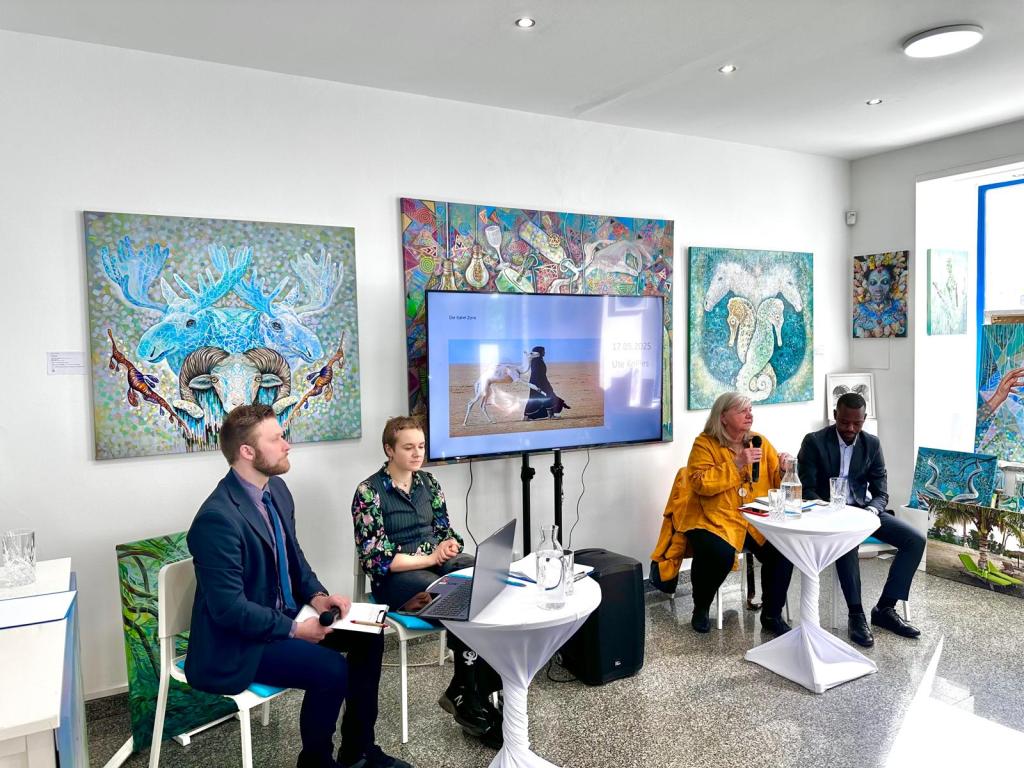
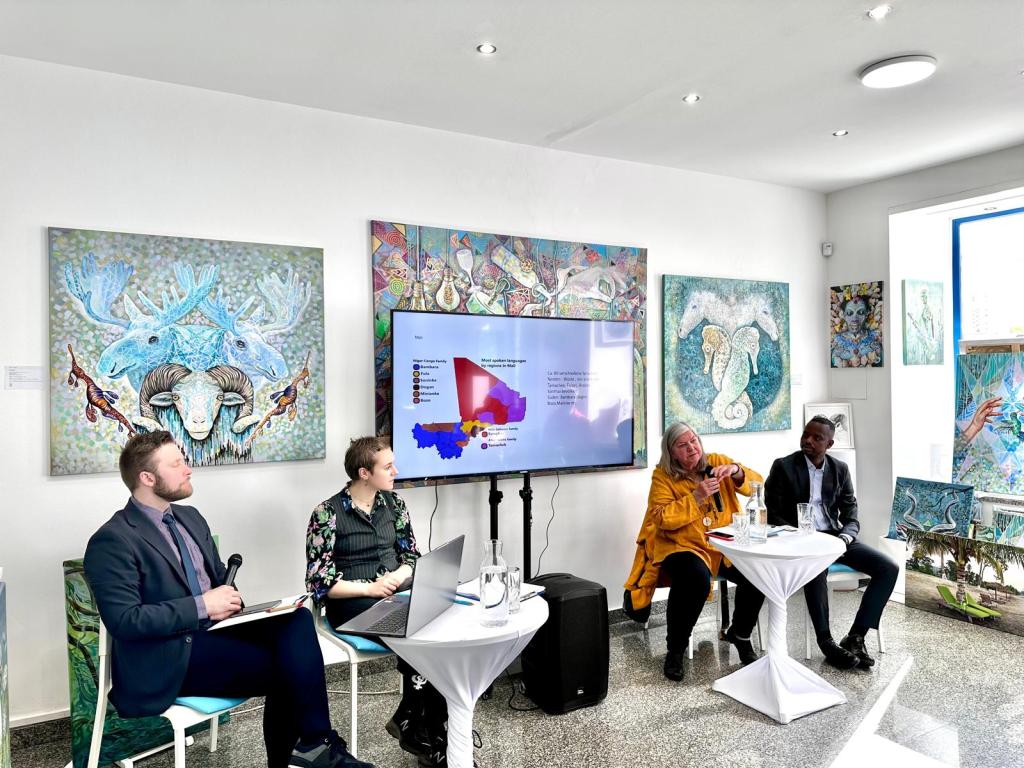
Sahel-Region im Fokus: Erfolgreiche Podiumsdiskussion in Wiens Kunstgalerie Bella Volen
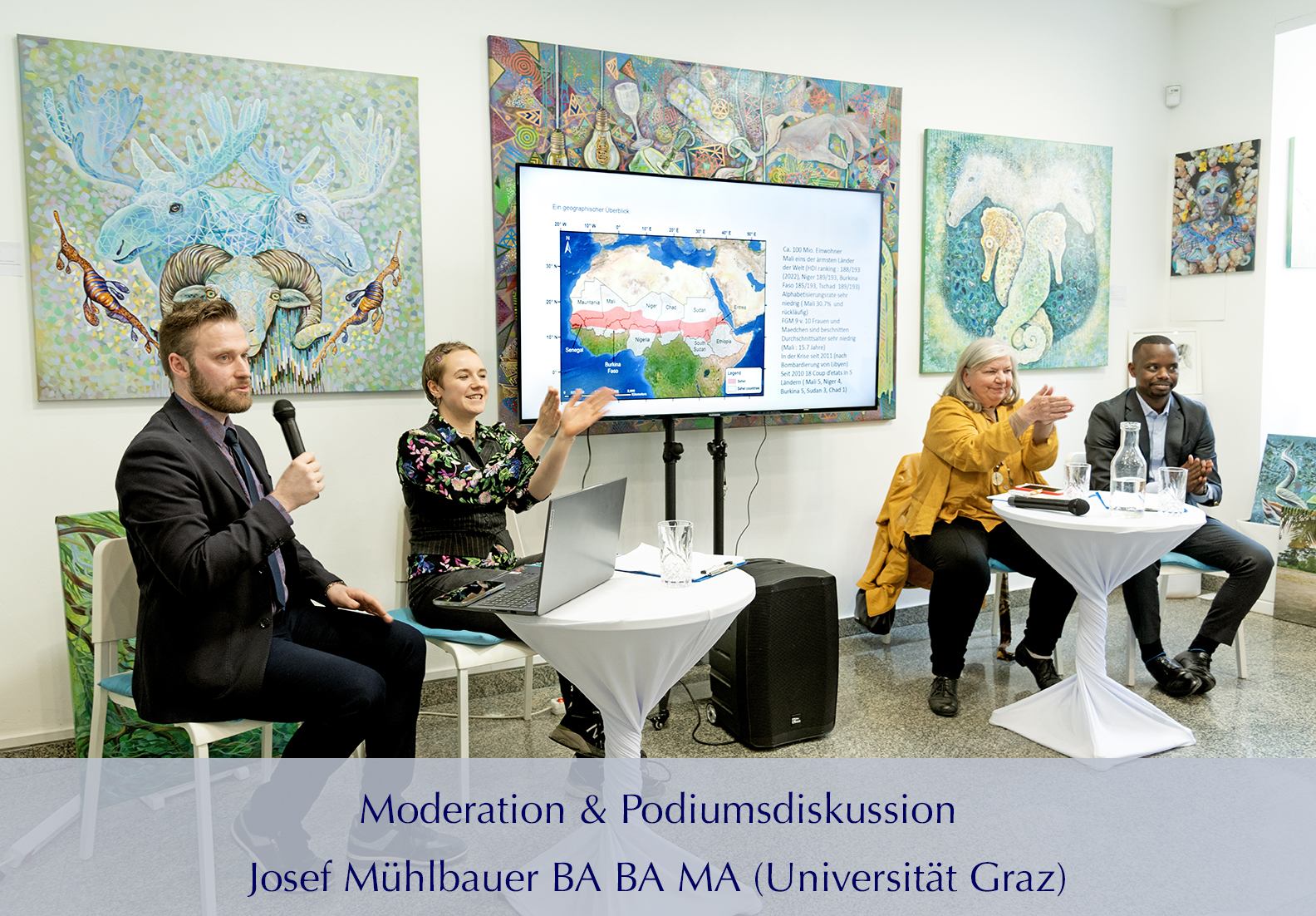
Podiumsdiskussion zur Sahel Region in Afrika & Frieden mit dem Friedensforscher, Friedensexperten und Friedensbuchautor Josef Mühlbauer
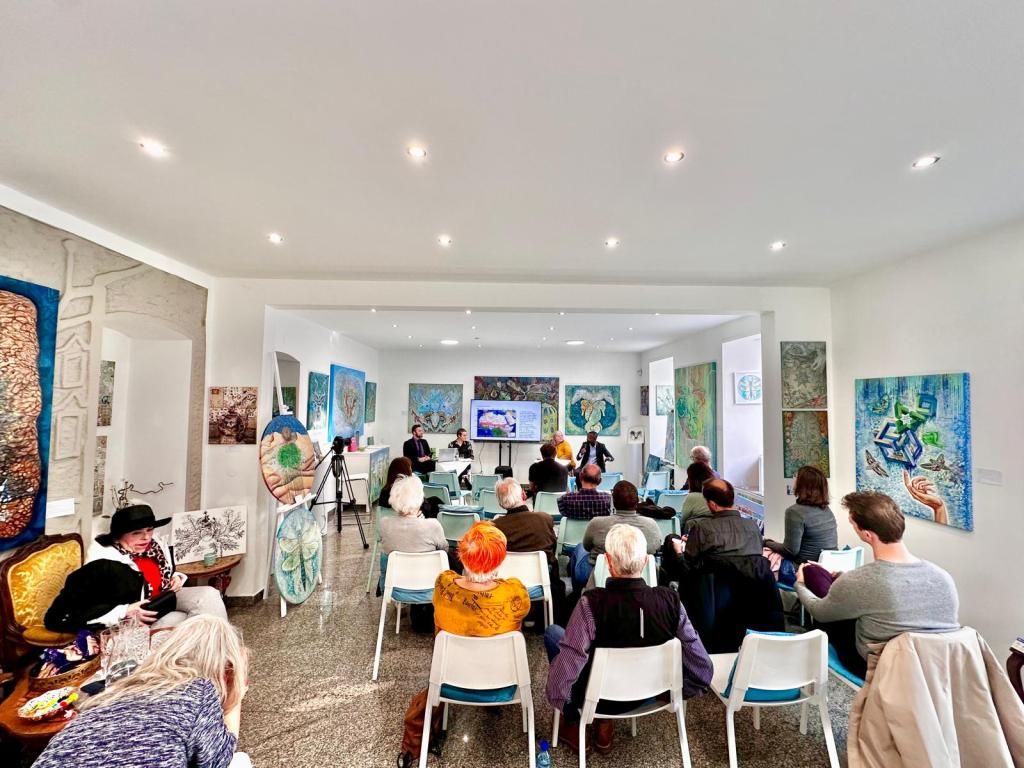
Die Podiumsdiskussion zur Sahel-Region fand am 17.5, in der Kunstgalerie Bella Volen (auf der Landesgerichtsstraße 6, 1010 Wien) statt und wurde vom Buchautor, Speaker, Friedensforscher der Universität Graz Josef Mühlbauer moderiert und organisiert. Die Veranstaltung wurde sehr gut besucht und unter den Teilnehmer:innen waren Expert:innen aus dem Institut für Internationale Entwicklung, der GIZ (Entwicklungszusammenrarbeit) aus dem Verteidigungsministerium und auch hochrangige Diplomaten beehrten die Diskussion. Hier einige Fotos und Eindrücke (c)Bella Volen:
Diese Veranstanstaltung fand in Kooperation mit der Universität Graz (dem Institut für Global Governance) & Empowerment for Peace (EfP) statt und wurde von der Stadt Wien (MA 7, Kultur) gefördert. Wir danken Prof. Wolfgang Hofkirchner und dem GSIS Institut, dem Vienna Institute for International Dialogue and Cooperation (VIDC), dem Institut für Afrikawissenschaften, dem Varna Institute for Peace Research (VIPR) und u.a. dem Falter für die Verbreitung und Ankündigung des Events!
Die Podiumsdiskussion zur Sahel Region in Afrika und Geopolitik ist auf dem YouTube Kanal des Varna Peace Institute (VIPR) – Hier nachsehen!
Experten-Insights aus Wien: Migration, Ressourcenfluch und EU-Politik zur Sahel-Krise, u.a. aus Perspektive der Friedensforschung
Nach der thematischen Einführung und der Vorstellung aller Podiumsteilnehmer, begann Mag.art Bella Volen die Keynote Speech, in der sie über verschiedene Arten und Formen der (Körper-)Kunst sprach. Danach machte Ute Kollies mit ihrer Erfahrung vor Ort in der Sahel-Region als UN-Diplomatin den inhaltlichen Auftakt. Sie berichtete nicht nur über ihre persönliche Erfahrung, sondern bettete diese auch in den größeren politischen und geostrategischen Rahmen ein. – In diesem thematischen Einstieg ging darum die kulturelle Vielfalt dieser Region in aller Deutlichkeit zu zeigen. Diese hat nämlich auch gravierende Folgen für die geopolitische, geoökonomische, politische und wirtschaftliche Dimension dieser Region in Afrika. Ute Kollies hat über 30 Jahre in einigen afrikanischen Staaten wie Mali & Chad gewohnt und gearbeitet, daher hat sie einen nicht nur zahlreiche Kontakte in der Sahel Region sondern auch tiefliegenden Einblicke. Im Interview mit dem Varna Peace Institute und dem Friedensjournalist Josef Mühlbauer geht sie auf zudem auf das Ernährungssystem (Food Regime in Africa) und auf die Militärregime bzw. Coup de etats ein die in der Sahel Region vor allem in Niger, Mali und Burkina Faso passiert sind in den letzten Jahren. Hier geht es zum Video.
Ressourcenpolitik und Kolonialismus: Anna Rauchenwalds EU-Empfehlungen im Check
Danach stellte die Christiane-Rajewski Preisträgerin Anna Rauchenwald den Kontext von Migration(sregime), Ressourcen(politik) und Kolonialismus her. Am Ende ihres Vortrags hat sie auch verschiedenen Maßnahmen und Policy-Empfehlungen für die EU ausgesprochen. Sie ist eine preisgekrönte Friedensforscherin und hat ihre Masterarbeit der EU-Politik und Militärpräsenz in der Sahel Region gewidmet. Sie wurde vom österreichischen Buchautor, Friedensexperten und Friedensjournalisten Josef Mühlbauer zu diesen Themen interviewt (hier zu sehen).
Last but not least kam der Friedensforscher und Mediator Charles Barisa zu Wort. Er betone die Instabilität der Region, schilderte nochmals das Konzept des Ressourcenfluchs und hielt seine Rede auf Englisch. Nach einem sehr heftigen Applaus öffente der Moderator und Organisator des Events Josef Mühlbauer (Universitätsassistent der Uni Graz) den Raum für Fragen, Anmerkungen und Ergänzungen aus dem hochkarätigen Publikum. Und tatsächlich kamen sehr spannende und wichtige Wortmeldungen und es entstand eine sehr lebendige Diskussion. In einem Interview mit dem afrikanischen Experten und Friedensforscher aus dem Senegal Dr. Mamadou Bodian wurde auf diese historische Dimension und Thematik tiefliegender eingegangen (Varna Peace Interview mit dem Friedensforscher Josef Mühlbauer und dem Politikwissenschaftler Mamadou Bodian).
Nach rund 90min ging die Diskussion zur Sahel-Region in kleineren Gruppen mit einem Glas Wein, Bier oder Tee weiter – bei gemütlichem Ambiente innerhalb der wunderschönen Kunstgalerie. Das Feedback der Gäste war durchwegs positiv. Abonniert einfach den YouTube Kanal – Varna Peace Institute und die Eventsite von der Kunstgalerie https://www.eventbrite.at/o/bella-volen-gallery-49559916863 damit ihr immer am neuesten Stand seid und künftig keine Veranstaltung mehr verpasst.
Warum die Sahel-Region Europa bewegt: 3 Key Takeaways der Wiener Diskussion
Mit der EU Außen- und Sicherheitspolitik werden paternalistische Muster identifiziert, die zur Abschottung der EU-Außengrenzen führen und somit vielen Menschen das Leben kostet
Die Sahel-Region ist im Fokus der großen Mächte. Früher die klassische Kolonialmacht Frankreich, heute Russland und China.
Die Sahel-Region ist reich an Ressourcen, seltenen Erden usw. daher entstehen soziale, politische aber auch geostrategische Kämpfe (Ressourcenfluch, bzw. paradox of plenty).
Frieden, Friedensforscher, Friedenswissenschaft, Friedensbuchautor, Josef Mühlbauer, Speaker zu Frieden, Sahel Region, Podiumsdiskussion Afrika, Universität Graz, Empowerment for Peace, VIDC, Wien, Österreich, Kulturevent, Politische Podiumsdiskussion, Politikwissenschaft, Moderation, Friedensevent, Friedensbewegung, Friedensjournalismus, Friedensjournalist, Friedensexperte
Stadt Wien fördert Dialog: Von Kunst, Kultur bis (Geo-)Politik die Sahel-Region beleuchten
Wir danken nochmals unserer Gastgeberin Mag.art Bella Volen, dass sie uns die Räumlichkeiten zur Verfügung gestellt hat, wir danken den Podiumsteilnehmer:innen für ihre Expertise, wir danken dem Publikum dass sie so zahlreich erschienen sind und wir danken ganz herzlichst unserer Kooperationspartnern und unserem Fördergeber nämlich der Stadt Wien (MA 7, Kultur).
Möchten Sie weitere solche besuchen, oder diese Art der Friedensbildung, Friedensforschung und Friedensjournalismus unterstützen? Dann abonnieren Sie den YouTube Kanal des Varna Peace Institute, abonnieren Sie diese Website und teilen Sie diesen Inhalt in ihren Social Media Netzwerken. Damit helfen sie der Peace Community.
Weitere Podiumsdiskussion und Event moderiert vom Friedensjournalisten und Friedensforscher Josef Mühlbauer zu den Themen Frieden, Friedensbildung, kritische Friedensforschung finden Sie ebenfalls auf dem YouTube Kanal VIPR – Varna Peace Institute.
Peace in Crisis: Herausforderungen und Chancen für eine Welt im Umbruch
Austrian Forum for Peace: 30. Juni – 3. Juli 2025, Konferenz auf der Friedensburg Schlaining Die Welt befindet sich an einem Wendepunkt. Globale Friedensbemühungen stehen vor nie dagewesenen Herausforderungen: bewaffnete Konflikte, Klimakrise, der Rückgang demokratischer Strukturen, schrumpfende Handlungsspielräume der Zivilgesellschaft, neue Technologien und zunehmende Desinformation. Inmitten globaler Krisen bringt das Austrian Forum for Peace 2025 internationale Expertinnen, Aktivistinnen und Interessierte zusammen, um innovative Wege für den Frieden zu finden.
Es ehrt mich sehr als Experte beim diesjährigen Austrian Forum for Peace dabei sein zu dürfen und freue mich schon sehr auf den Austausch! Als wissenschaftlicher Mitarbeit bei Empowerment for Peace und als Universitätsassistent der Universität Graz versuche ich mit meiner Wissenschaftskommunikation die neuesten wissenschaftlichen Erkenntnisse einer breiten Öffentlichkeit zu übermitteln. Bei diesem Austria Forum for Peace werden Expert:innen aus Wissenschaft auf zivilgesellschaftliche Akteure und Politiker:innen sowie Diplomat:innen zusammenkommen um über globale und lokale Herausforderungen und Chancen zu sprechen. Gerade deswegen freut und ehrt mich diese Einladung sehr!
Offene Workshops
Konfliktfall Renaturierung – Umgang mit kommunalen Konflikten im Zusammenhang mit Renaturierungsmaßnahmen, 1. und 2. Juli
Lebendige Bücher – Yaşayan Kitaplar – Žive knjige – ספריםמלאיחיים – Libros Vivientes
Živindi Lil – Lively Books – ﻛﺗبﺣﯾﺔ – Élő Könyvek (Mehrsprachig), 1. und 2. Juli (Teilnahme auch mit gültigem Museumsticket möglich)
The Blueprint: Austria’s PeaceTech Vision – A Collaborative Dialogue (auf Englisch), 2. Juli Öffentliche Veranstaltungen im Rahmen der Konferenz – Eintritt frei:
Podiumsdiskussion am 1. Juli: Europa ohne Washington? Neue Strategien im Umgang mit Russland – Eine friedenspolitische Standortbestimmung
Filmvorführung und Diskussion mit Regisseur Friedrich Moser am 2. Juli: How to Build a Truth Engine (Executive Producers: George Clooney und Grant Heslov) Anschließend: Burgfest Weitere Informationen: http://www.peaceforum.at
Organisiert vom Österreichischen Friedenszentrum (ACP) und unterstützt durch das Land Burgenland und den CPDC
Weitere Reports, Friedensbeiträge, Bücherlesungen und Vorstellung von wissenschaftlichen Artikel zur Friedensforschung bzw. Podiumsdiskussionen und live Interviews finden Sie auf dem YouTube Kanal – VIPR – Varna Peace Institute mit dem Host, Speaker, Moderator und Friedensjournalist bzw. Friedensforscher Josef Mühlbauer.
Josef Mühlbauer, arbeitet für die Universität Graz, ist wissenschaftlicher Mitarbeiter bei der NGO Empowerment for Peace (EfP) und herausgeber sowie Autor zahlreicher Bücher und wissenschaftlicher Beiträge. Er ist darüber hinaus ein Moderator, Speaker, Friedensjournalist und Politikwissenschaftler in Österreich. Als Friedensforscher arbeitet er zu politischen, geopolitischen und geoökonomischen Themen. Hier geht es zum Portfolio – Link. Und hier zu den Publikationen.
Netzwerken & Kontakte knüpfen – sie suchen Quellen, Inspiration, Expert:innen und Austausch mit Kolleg:innen und zukünftige neue Projekte? Sie suchen Verleger, Lektoren, Agenten oder Ko-Autor:innen?
Inspiration und Ideenfindung: sie suchen neue Themen, Storyideen und verschiedene Perspektiven? Sie suchen Kritiker:innen oder kreative Formate?
Professionelle Entwicklung: sie suchen gesellschaftliche Trends, neue Vermarktungsideen, Podcasts wie das Varna Peace Institute (mit über 4500 Abonennt:innen auf YouTube) um neues Publikum zu erreichen?
Bella Volen und Josef Mühlbauer haben jahrelange Erfahrung im Networking, Mastermind und in der Kreativbranche. Beide verbindet die Leidenschaft für Sprache und Storytelling, beide teilen ein großes Interesse an gesellschaftlichen Entwicklungen und öffentlichen Debatten, beide haben bereits zahlreiche Events, Podiumsdiskussionen, Buchlesungen und Buchvorstellungen in der Kunstgalerie Bella Volen auf der Landesgerichtsstraße 6, 1010 organisiert.
Seid also auch dabei und lasst uns alle gemeinsam wachsen und voneinander viel lernen!
17.4.2025, 18:30 LIVE Podiumsdiskussion zu 80 Jahre UN: Themenschwerpunkt der Podiumsdiskussion ist die kritische Analyse des gegenwärtigen Zustands der Vereinten Nationen. Welche Chancen und Herausforderungen gibt es? Welche Reformen braucht es? Gilt die UN-Charta noch angesichts Gaza, Ukraine und ua. Kongo? Wie muss sich der UN-Sicherheitsrat anpassen, angesichts der neuen multipolaren Weltordnung? Wie kann die Zivilgesellschaft einen möglichen Reformprozess unterstützen? Es diskutieren: Dr. med. Angelika Claußen, Präsidentin IPPNW Europa, Co-Vorsitzende der deutschen IPPNW-Sektion Dr. h.c. Hans-Christof von Sponeck, Diplomat, Autor, Beigeordneter UN-Generalsekretär a.D. apl. Prof. Dr. Klaus Moegling, i.R., habilitierter Politikwissenschaftler und Autor, FB Gesellschaftswissenschaften der Universität Kassel Andreas Bummel, Direktor von Democracy without Borders Rolf Bader, ehem. Geschäftsführer der deutschen Sektion der Internationalen Ärzte/-innen für die Verhütung des Atomkrieges/ Ärzte/-innen in sozialer Verantwortung e.V. (IPPNW). Moderation: Josef Mühlbauer, Autor, Politikwissenschaftler, Friedensjournalist https://www.youtube.com/watch?v=EvsEIRGmkFE
Friedensarbeit in Zeiten der Klimakrise: Konferenz des Netzwerks für Friedensforschung und Konfliktbearbeitung in Österreich (NEFKÖ)
bis 25. April 2025 Afro-Asiatisches Institut Graz (Leechgasse 24, 8010 Graz) Theater im Bahnhof (Elisabethinergasse 27a, 8020 Graz)
Kurzer Auszug des Programms
Workshops Degrowth und sozial-ökologische Transformationsstrategien – Josef Mühlbauer (Empowerment for Peace) Renaturierung und praktische Konfliktarbeit – Sophia Stanger und Wolfgang Weilharter (beide Austrian Centre for Peace) Demokratie gemeinsam stärken für Klimaschutz und Friedensförderung – Arno Niesner (ARGE Gemeinwohlcontrolling / Armutsnetzwerk)
29.4.2025 Networking für Journalisten und Autoren Mag.art Bella Volen und Josef Mühlbauer BA BA MA laden in der Kunstgalerie Bella Volen um 18.30 ein zum Austausch und Mastermind. Vertreter von großen Medien und zahlreiche Autoren werden sich austauschen und Erfahrungen teilen. Ort: Landesgerichtsstraße 6, 1010 Wien. Anmeldung unter: info@bella-volen.com

















 Josef Mühlbauer