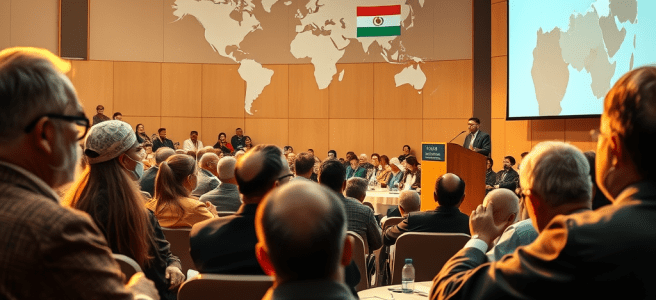
2nd International Conference on Critical Peace Studies – 6th August 2025, Pakistan – Report by Josef Mühlbauer
The 2nd International Conference on Critical Peace Studies provided a vital platform for rigorous scholarly engagement with pressing global conflicts and the structures perpetuating violence. The final announcement underscored the urgency felt by participants, particularly highlighting the ongoing crisis in Gaza as a backdrop demanding critical reflection and action. Keynote presentations offered profound theoretical and practical insights into pathways toward transformative peace.

Highlights – Decolonizing Knowledge, Power and Being
Prof. Richard Jackson delivered a powerful and urgent address, invoking Walter Mignolo’s concept of „Epistemic Disobedience.“ He argued that the current era, marked by the „live-stream genocide in Gaza,“ necessitates a radical break from dominant, often Western-centric, knowledge systems that normalize or obscure such violence. Jackson passionately advocated for the creation and centering of indigenous knowledge as an act of resistance and a fundamental step towards building genuine peace. He framed epistemic disobedience as an essential scholarly and ethical imperative in times of overwhelming state violence and propaganda.
Prof. Huma Baqai provided a compelling analysis of contemporary shifting geopolitical alliances and realignment. She critiqued the common framing of the emerging world order as „multipolar,“ arguing that this term evokes the dangerous rivalries and bloc politics that characterized the era leading up to and including the First World War. Instead, Baqai strongly advocated for the concept of „Multiplexity.“ She defined this as a global system characterized by:
–> Multidimensionality: Complex interactions across multiple axes (economic, cultural, technological, security) beyond simple power poles.
Baqai argued that embracing multiplexity, rather than multipolarity, offers a more accurate and hopeful framework for navigating current global complexities and fostering cooperative stability.
–> The Absence of Hegemony: No single power or bloc dominating.
–> Decentralization: A more distributed and networked international structure.
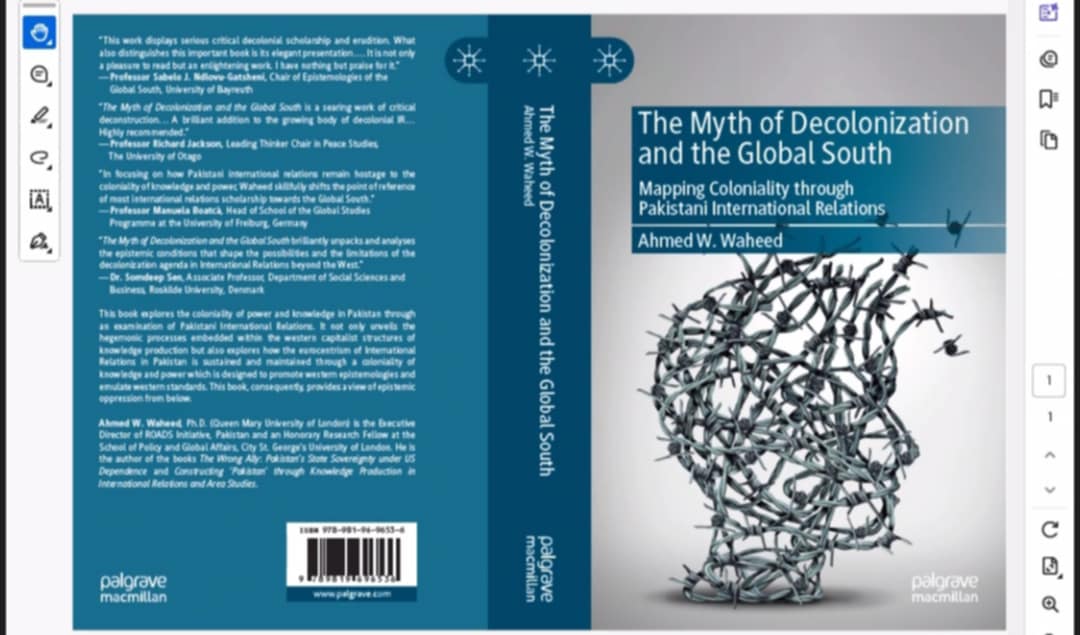
Dr. Ahmad Waqas Waheed presented his significant work, „The Myth of Decolonization and the Global South.“ His presentation critically examined the persistent structures of power, knowledge, and economic dependency that continue to shape North-South relations long after formal colonial independence. He challenged the notion that decolonization is a completed project, arguing instead for a deeper understanding of its unfinished nature and the enduring challenges faced by the Global South within the contemporary international system.
The conference featured a rich tapestry of presentations beyond the keynotes. Numerous scholars, activists, and practitioners presented cutting-edge research and critical analyses on diverse themes, including:
- Postcolonial and Decolonial Approaches to Peace & Conflict: Exploring the enduring legacies of colonialism and imperialism in contemporary conflicts and peacebuilding paradigms. Dr. Caroline Schöpf explored the machanisms of interellectal imperialims & academic dependency as well as the possibility of autonomous knowledge.
- Intersectionality in Peace & Security: Examining how gender, race, class, religion, and other identities shape experiences of conflict and peace.
- Critical Security Studies: Questioning traditional state-centric security models and exploring alternative conceptions of human and ecological security.
- Peace Education & Pedagogy: Discussing innovative and critical methods for teaching peace and challenging structures of violence within educational systems.
- Non-Western & Indigenous Peace Traditions: Highlighting diverse philosophies and practices of peacebuilding from often marginalized perspectives.
- The Political Economy of Conflict: Analyzing the role of resources, economic systems, and global capitalism in driving and sustaining violence.
The depth and breadth of these presentations, spanning various disciplines and geographical contexts, significantly enriched the conference dialogue and underscored the multifaceted nature of critical peace studies.
Personal Reflection & Key Takeaways
Attending this Second International Conference on Critical Peace Studies was an exceptionally enriching experience. The intellectual rigor, the courageous engagement with contemporary atrocities like the situation in Gaza, and the profound theoretical contributions – particularly the emphasis on epistemic disobedience (Jackson), multiplexity (Baqai), and the critique of decolonization myths (Waheed) – provided invaluable insights and frameworks for understanding and challenging the root causes of violence and injustice in our world. The conference not only deepened my theoretical understanding but also reinforced the crucial role critical scholarship plays in advocating for a more just and peaceful future. I learned a tremendous amount from the diverse perspectives shared and the passionate commitment of all participants. Specifically, the conference significantly deepened my understanding in several critical areas:
The Necessity of Normative Scholarship for the Subaltern: Moving beyond detached objectivity, the conference validated the importance of engaged, normative scholarship. It powerfully demonstrated that researching and writing for and alongside the subaltern – centering their experiences, perspectives, and struggles – is not just acceptable but essential and good. This normative commitment is key to dismantling oppressive structures and amplifying marginalized voices in the pursuit of justice and peace.
The Strategic Imperative of South-South Cooperation: Presentations and discussions illuminated the vital role of South-South cooperation as a practical mechanism for challenging dominant power structures and fostering alternative pathways to development, security, and knowledge exchange outside traditional Western-centric frameworks. This emerged as a crucial strategy for building resilience and agency within the Global South.
Epistemic Liberation: Free & Non-Western Knowledge Production: Prof. Jackson’s powerful call for „epistemic disobedience“ resonated profoundly, underscoring the urgent need to break free from hegemonic knowledge systems. The conference strongly reinforced the critical importance of free, non-Western knowledge production, particularly the validation, creation, and centering of Indigenous knowledge. This is not merely an academic exercise but a fundamental act of resistance and a prerequisite for genuine peace and understanding.
 Josef Mühlbauer