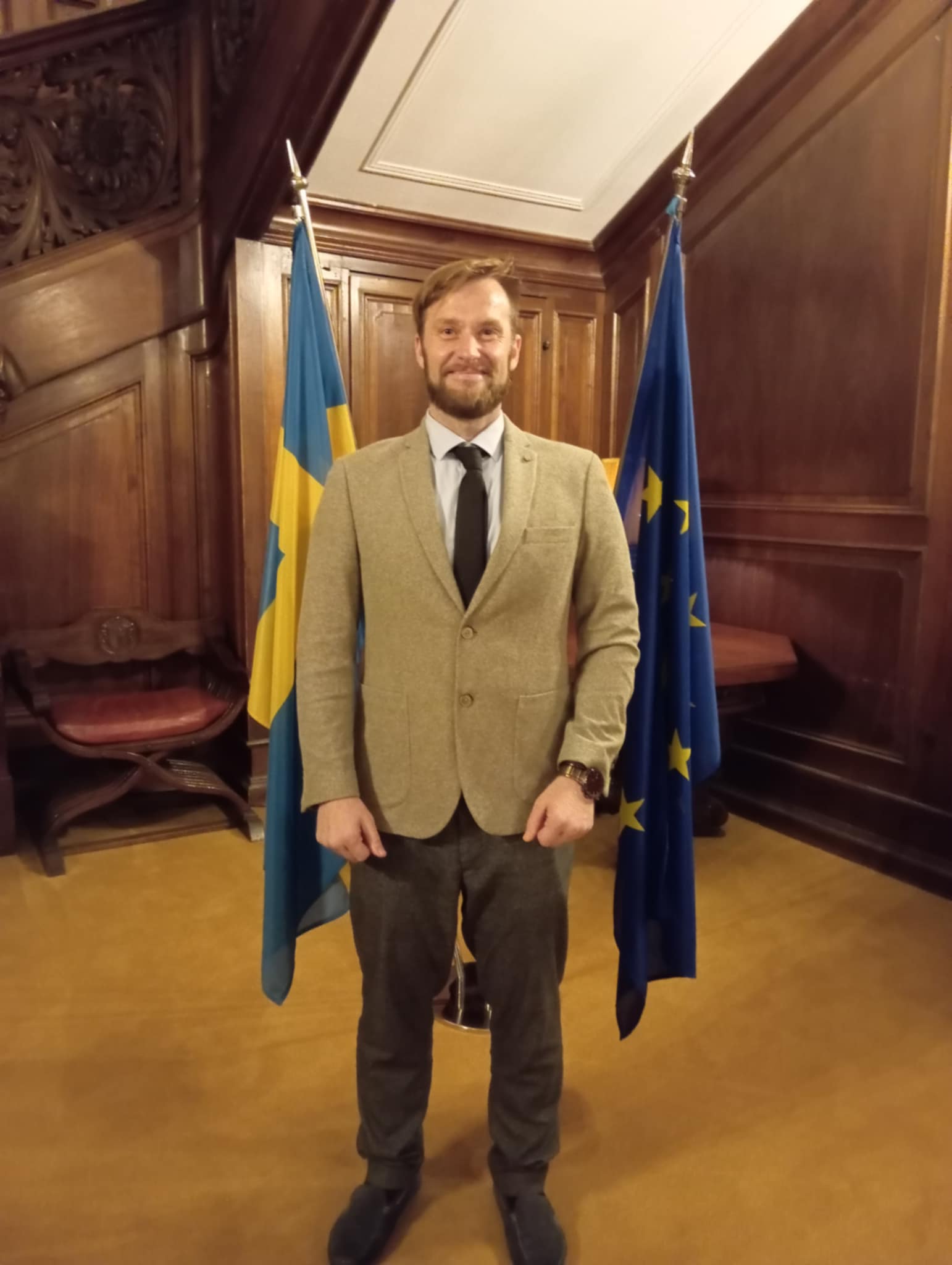
Pathways to Peace: Legal Accountability and Feminist Peacebuilding – Panel discussion on feminist peace and security policy
Glad to had the wonderful opportunity to be invited at the Swedish Embassy in Austria! – Short Report by Peace Researcher Josef Mühlbauer (University of Graz)
My Takewaways from the Panel Discussion on the UNSCR 1325:
The UNSC Resolution 1325 on Women, Peace, and Security isn’t a niche Issue, it’s a strategic imperative and a pathway to peace. Before UNSCR 1325, the work of women in peacebuilding was often informal, overlooked, and underfunded. The resolution, adopted unanimously in 2000, elevated women’s participation from a „nice-to-have“ to a mandatory component of international peace and security efforts. It provided a legal and political basis for advocates to hold governments and the UN itself accountable.
Milestone in Peace Building/ Peace Keeping & Peace Research: On October 31, 2000, the UN Security Council made history. For the first time, it recognized that war impacts women differently—and that women are not just victims, but powerful agents of peace. This was the birth of Resolution 1325 on Women, Peace, and Security (WPS).
Why is the UNSCR 1325 so important?
It is important because sustainable peace is only possible when women are equally included. Studies show that peace agreements are 35% more likely to last at least 15 years when women are involved in their creation. UNSCR 1325 isn’t just about fairness; it’s about effectiveness, it is about resiliant peace!
Key facts & milestones – Four Pillars of Peace
2000: UNSCR 1325 is adopted unanimously.
2009: The US becomes the first country to launch a National Action Plan (NAP) to implement the resolution.
2015: A Global Study on the implementation of UNSCR 1325 is published, highlighting both progress and critical gaps.
Today: Over 100 countries have adopted National Action Plans.
Pillar 1 Participation: It calls for increased representation and meaningful participation of women at all levels of decision-making, including in peace processes, conflict prevention, and post-conflict governance. This means women should be at the negotiating table, not just as observers but as mediators, negotiators, and signatories.
Pillar 2 Protection: It requires parties to conflict to take special measures to protect women and girls from gender-based violence, including rape and other forms of sexual abuse, in situations of armed conflict. This was a critical recognition of rape as a weapon of war.
Pillar 3 Prevention: It calls for integrating a gender perspective into conflict prevention efforts and early warning systems. This means understanding the different ways men and women experience and signal the onset of conflict.
Pillar 4 Relief and Recovery: It mandates the integration of a gender perspective into all humanitarian and post-conflict reconstruction programs. This ensures that the specific needs of women and girls (e.g., access to healthcare, education, and economic opportunities) are addressed in refugee camps, disarmament, demobilization, and reintegration (DDR) programs, and in rebuilding institutions.
Lets honor Sweden’s Pioneering Role 
Sweden has been a global leader in turning the principles of 1325 into action:
In 2014, Sweden became the first country in the world to officially adopt a feminist foreign policy, with the WPS agenda at its core.
The agenda is far from complete. As we face new conflicts and challenges, the principles of 1325 are more critical than ever. Just look at #Sudan#Gaza#Afghanistan ..
Lets honor the Speakers:

H.E. Annika Ben David, Sweden’s Ambassador to Austria and Slovakia as well as Sweden’s Permanent Representative to the United Nations in Vienna
H.E. Manizha Bakhtari, Ambassador and Permanent Representative Ambassador of Afghanistan in Vienna
Julia Prummer, Policy Advisor for the Austrian Foreign Minister, Federal Ministry for European and International Affairs
Jennifer Sarvary Bradford, Crime Prevention and Criminal Justice Officer, United Nations Office on Drugs and Crime
Dima Hussain, Legal Scholar, European University Institute in Florence and Centre for Religious Studies at the Central European University Vienna
Waruguru Gaitho, Gates Cambridge International Scholar of Law, Centre for Gender Studies at the University of Cambridge
Moderation: Miriam Mona Mukalazi, VIDC Global Dialogue
Critical Remarks on the UNSCR 1325:
There is unfortunately a gap between commitment/statements/declarations and the reality on the ground. While the norm is established, implementation is lagging. Women are still grossly underrepresented in formal peace processes. For example, between 1992 and 2019, women constituted only 13% of negotiators, 6% of mediators, and 6% of signatories in major peace processes. In conflicts from Ukraine to Sudan, Yemen, and the DRC, sexual violence continues to be used as a tactic of war, and women’s voices are often sidelined in humanitarian response and peace talks.

Author: Josef Mühlbauer BA BA MA (University Assistent at the University of Graz) is a peace researcher, published several books and peer reviewed academic articles, is a scientific researcher at Empowerment for Peace and the GSIS Institute. He is also the host of the Varna Peace YouTube Channel.


 Josef Mühlbauer